
Introduction
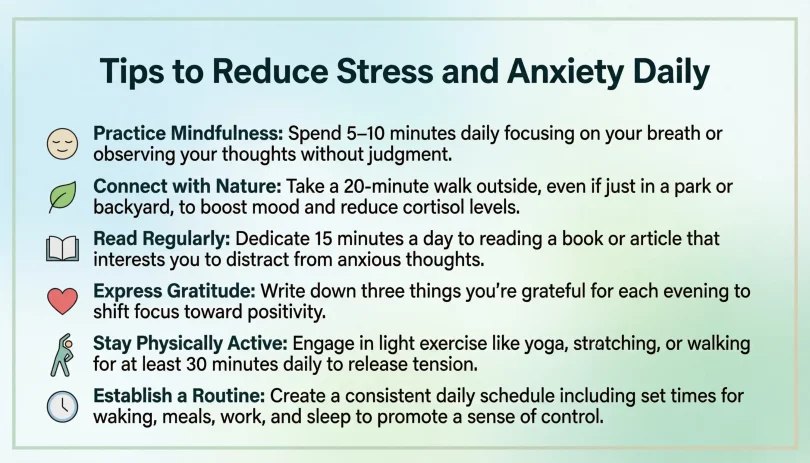
In today’s fast-paced world, stress and anxiety have become common problems affecting millions of people globally. Learning practical tips to reduce stress and anxiety daily is crucial for maintaining mental and physical health. Stress can impact sleep, mood, relationships, and even overall immunity, while prolonged anxiety can interfere with daily tasks and decrease productivity. Fortunately, small consistent actions can make a significant difference.
Many people wonder how to reduce stress naturally and seek guidance on incorporating manageable strategies into their daily routine. Simple lifestyle changes, mindful practices, and positive habits can help anyone feel calmer, more focused, and more energized. By understanding the root causes of stress and implementing daily stress relief techniques, individuals can take control of their mental well-being and improve their quality of life. This article explores practical and effective ways to manage anxiety, reduce stress, and embrace a calmer, balanced lifestyle.
What is Tips to Reduce Stress and Anxiety Daily?
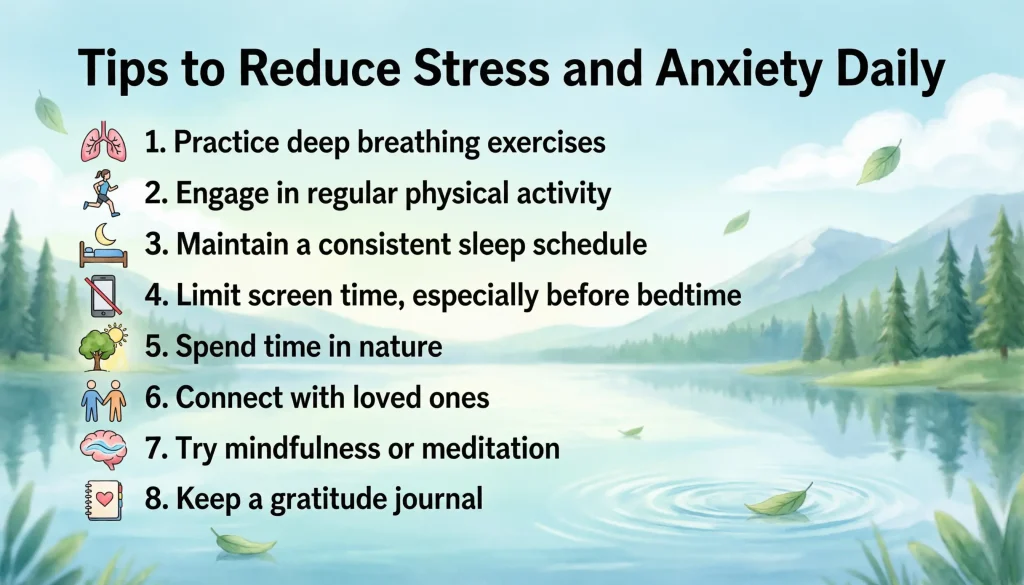
The phrase tips to reduce stress and anxiety daily refers to actionable strategies that individuals can implement every day to minimize stress and manage anxiety. These are not one-time solutions but consistent habits that improve mental resilience.
Stress is the body’s natural response to challenging situations, while anxiety is a more persistent feeling of worry or fear. Daily techniques to reduce stress and anxiety help balance hormones, lower cortisol levels, and enhance emotional well-being. Common approaches include:
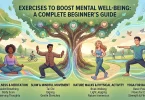
- Mindfulness and meditation
- Physical exercise
- Healthy eating habits
- Proper sleep schedules
These strategies focus on calming the mind, improving focus, and preventing burnout over time.
Why is Tips to Reduce Stress and Anxiety Daily Important?
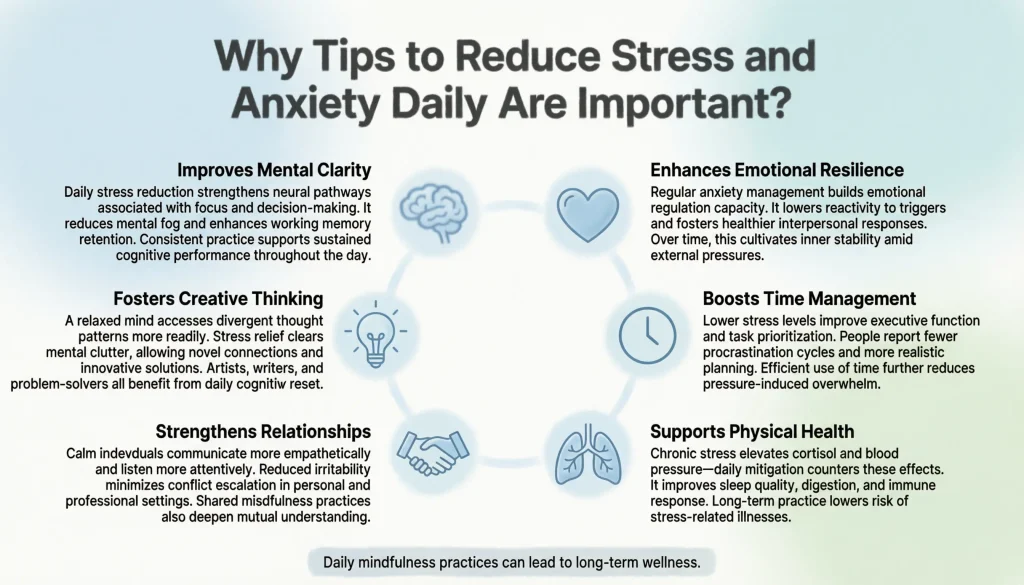
Managing stress and anxiety daily is essential for maintaining overall health. Chronic stress can lead to health complications such as high blood pressure, digestive issues, depression, and a weakened immune system. Anxiety, if unchecked, may cause panic attacks, sleep disorders, and reduced productivity.
Incorporating tips to reduce stress and anxiety daily helps:
- Improve emotional stability and mood
- Enhance concentration and decision-making
- Boost physical health and energy levels
- Strengthen relationships through better communication
- Prevent long-term mental health challenges
Regular stress management creates a proactive mindset rather than a reactive one. When daily habits include mindful practices and relaxation techniques, both mental clarity and physical health improve significantly.
Detailed Step-by-Step Guide
Step 1: Practice Mindfulness and Meditation
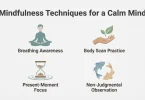
Mindfulness and meditation are some of the most effective daily stress relief techniques. They help focus the mind on the present moment, reducing unnecessary worries.
How to start:
- Dedicate 10–15 minutes each morning
- Sit in a quiet space, close your eyes, and focus on your breath
- Observe thoughts without judgment
- Gradually increase meditation time as you progress
Even beginners can experience reduced anxiety after consistent practice.
Step 2: Engage in Regular Physical Activity
Exercise naturally reduces stress hormones and triggers the release of endorphins, which are mood enhancers.
Effective activities:
- Walking or jogging
- Yoga and stretching
- Strength training
- Cycling or swimming
Physical activity is a proven way to improve mental resilience and manage anxiety effectively.
Step 3: Maintain a Healthy Diet
Nutrition plays a key role in emotional well-being. Eating well-balanced meals supports brain function and energy levels.
Tips:
- Include omega-3-rich foods like fish, walnuts, and flaxseeds
- Eat plenty of fresh fruits and vegetables
- Avoid excessive sugar and processed foods
- Stay hydrated throughout the day
A healthy diet reduces irritability and promotes mental clarity.
Step 4: Prioritize Sleep
Lack of sleep worsens stress and anxiety. A proper sleep schedule helps the body recover and manage emotional responses.
Suggestions:
- Maintain consistent sleep and wake times
- Avoid screens at least an hour before bed
- Create a relaxing bedtime routine
- Sleep in a cool, dark room
Even small improvements in sleep can significantly reduce daily stress levels.
Step 5: Deep Breathing Exercises
Deep breathing is a simple yet effective technique to manage anxiety in the moment.
Technique:
- Sit comfortably and close your eyes
- Inhale slowly through your nose for 4 seconds
- Hold your breath for 4 seconds
- Exhale slowly through your mouth for 6 seconds
- Repeat for 5–10 minutes
This helps calm the nervous system and reduces immediate stress.
Step 6: Limit Caffeine and Alcohol
High caffeine or alcohol intake can worsen anxiety and stress.
Tips:
- Reduce coffee or tea if you notice jitters
- Avoid alcohol as a stress-relief method
- Replace with herbal teas or water
- Focus on moderation
Moderating stimulants supports mental clarity and emotional balance.
Step 7: Practice Gratitude and Positive Thinking
Positive thinking and gratitude exercises improve mood and reduce stress.
How to practice:
- Maintain a gratitude journal, writing three things you are thankful for each day
- Focus on solutions rather than problems
- Celebrate small achievements
This encourages a positive mindset and lowers anxiety levels naturally.
Step 8: Engage in Hobbies and Creative Outlets
Hobbies act as a natural stress reliever. Activities that involve creativity or relaxation help divert the mind from stressors.
Examples:
- Painting or drawing
- Music or singing
- Gardening
- Reading or writing
Even 20–30 minutes daily can significantly improve mental well-being.
Step 9: Socialize and Communicate
Social support is crucial for emotional health. Talking to friends, family, or support groups reduces feelings of isolation.
Suggestions:
- Share feelings openly with trusted people
- Join hobby clubs or online communities
- Volunteer to help others
Human connection is one of the most effective ways to manage stress and anxiety.
Step 10: Set Realistic Goals and Manage Time
Time management and realistic goal setting prevent unnecessary stress.
Tips:
- Break tasks into small, manageable steps
- Prioritize important tasks
- Avoid overcommitting
- Use planners or apps to track progress
Structured routines help reduce anxiety caused by overwhelming responsibilities.
Benefits of Tips to Reduce Stress and Anxiety Daily
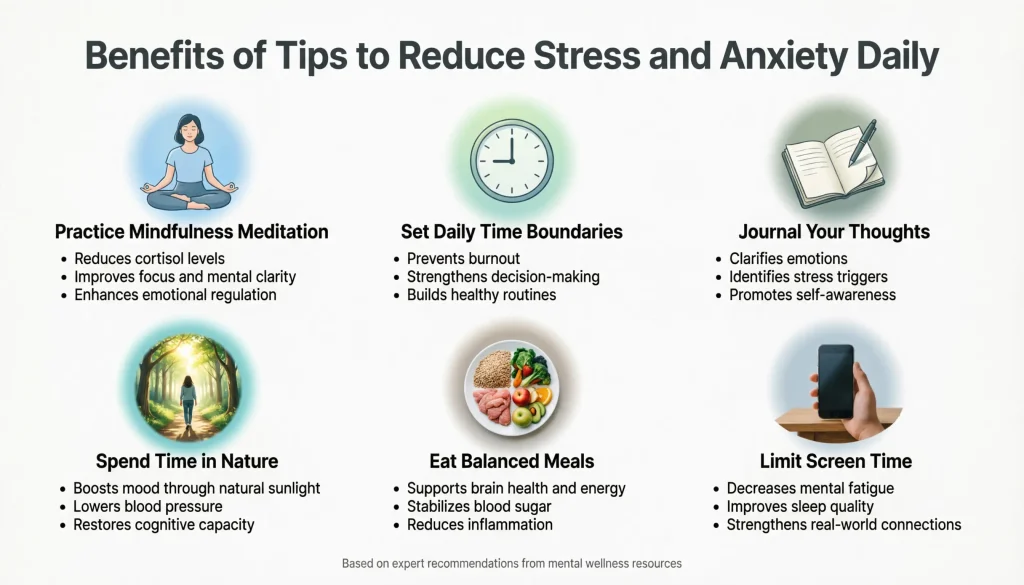
- Improved mental clarity and focus
- Better emotional control and mood
- Enhanced physical health and energy
- Reduced risk of chronic diseases
- Better sleep quality
- Stronger interpersonal relationships
- Increased productivity and efficiency
- Overall improved quality of life
Disadvantages / Risks
- Overdoing relaxation can reduce productivity temporarily
- Excessive focus on anxiety may increase obsessive thinking
- Ignoring professional help when necessary
- Relying solely on self-help without medical guidance
Awareness is key; balance between self-practice and professional support is essential.
Common Mistakes to Avoid
- Expecting instant results from stress management techniques
- Neglecting regular physical activity
- Using alcohol or unhealthy foods as coping mechanisms
- Skipping sleep for work or screen time
- Avoiding talking about stress or anxiety
- Ignoring persistent or severe symptoms
Avoiding these mistakes ensures daily strategies are effective and sustainable.
How long should I practice stress-relief techniques daily?
Even 10–30 minutes daily can provide noticeable benefits over time.
Can meditation really reduce anxiety?
Yes. Meditation lowers cortisol levels, improves focus, and enhances emotional stability.
What foods help reduce stress naturally?
Fruits, vegetables, nuts, seeds, fish, and whole grains support brain health and reduce stress.
How do hobbies help manage anxiety?
Hobbies distract from stress, encourage creativity, and provide relaxation, improving mood naturally.
Is talking to friends really effective for stress?
Yes. Social support reduces isolation, encourages positive thinking, and provides practical advice.
Can daily exercise replace therapy for anxiety?
Exercise is beneficial but should not replace professional mental health therapy when needed.
Are there quick fixes for daily stress?
Deep breathing, short meditation, and short breaks can help, but consistent habits are most effective.
Expert Tips & Bonus Points
- Track your stress triggers to avoid them proactively
- Practice mindfulness while doing routine tasks like eating or walking
- Take short breaks during work hours to relax the mind
- Listen to calming music or nature sounds
- Use essential oils or aromatherapy for relaxation
- Combine multiple techniques for maximum effect
Consistency is key. Small daily efforts compound into significant mental health improvements over time.
Conclusion
Adopting tips to reduce stress and anxiety daily is a crucial step toward a healthier and more balanced life. Stress and anxiety affect everyone at some point, but manageable daily routines can prevent them from becoming overwhelming. By incorporating mindfulness, regular exercise, proper nutrition, sufficient sleep, and social support, anyone can significantly improve their mental and physical well-being.
These strategies not only help reduce anxiety but also improve focus, energy, and overall life satisfaction. Awareness, consistency, and patience are essential for long-term success. Understanding how to reduce stress naturally and practicing daily stress relief techniques equips you with the tools needed to face life’s challenges confidently. With regular effort and proactive habits, stress and anxiety can be managed effectively, allowing you to lead a happier, calmer, and healthier life.