
Introduction
The early signs of cancer are often subtle and easy to ignore. Many people assume that small changes in their body are caused by stress, aging, or minor infections. However, understanding the early signs of cancer can make a life-changing difference. When cancer is detected early, treatment options are usually more effective, less aggressive, and more successful.
Today, many people ask questions like: What are the common cancer warning signs? What are the symptoms of cancer in early stages? And most importantly, how to detect cancer early before it becomes serious? This guide will help you understand everything in simple language. By recognizing unusual changes in your body and acting quickly, you can protect your health and possibly save your life.
What is Early Signs of Cancer?
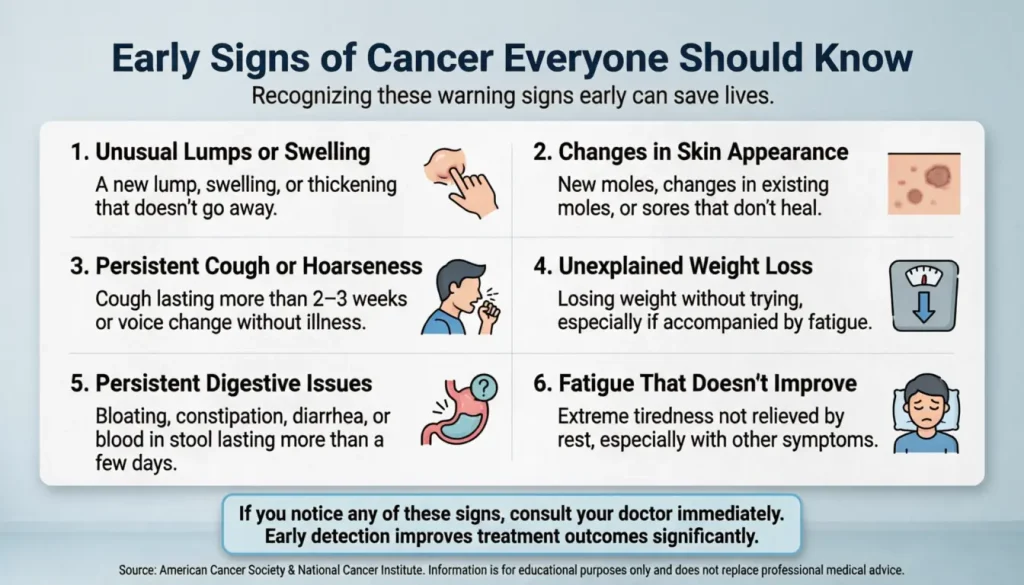
Early signs of cancer refer to the first physical or internal changes that may indicate abnormal cell growth in the body. These changes are often small and may not cause severe pain or discomfort at first.
Cancer begins when cells grow uncontrollably. In the early stage, this growth may not spread to other parts of the body. That is why symptoms of cancer in early stages can sometimes be mild.
Some common cancer warning signs include:
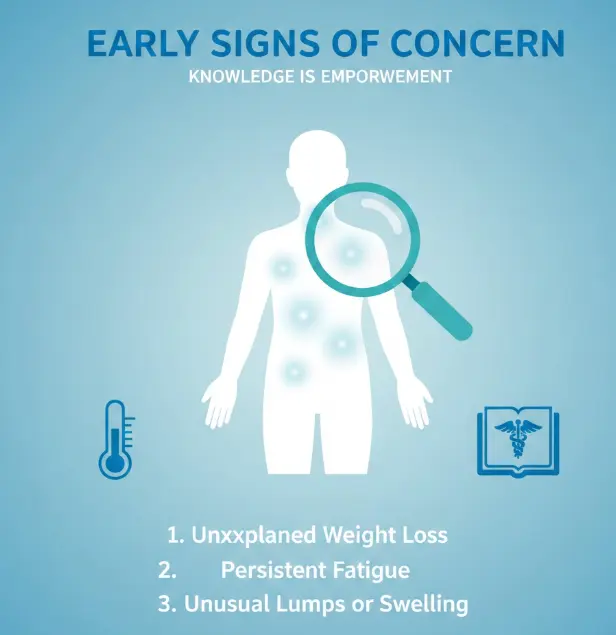
- Unexplained weight loss
- Persistent fatigue
- Unusual bleeding
- Changes in skin or moles
- Long-lasting cough
These signs do not always mean cancer. However, if they continue for weeks or get worse, medical advice is important.
Why is Early Signs of Cancer Important?
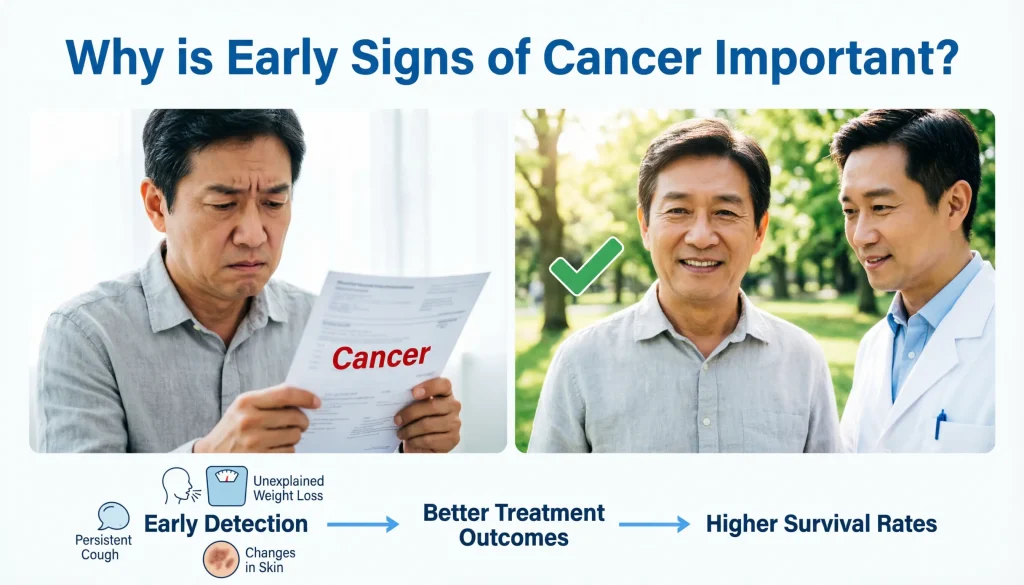
Recognizing the early signs of cancer is important because early detection increases survival rates. When cancer is found early, treatment may involve less complex procedures.
Here’s why early detection matters:
- Higher treatment success rate
- Lower treatment costs
- Less aggressive therapies
- Better quality of life
For example, early-stage breast cancer has a much higher survival rate compared to advanced stages. Similarly, detecting colon cancer early can prevent it from spreading.
Understanding common cancer warning signs gives you the power to act quickly instead of waiting until symptoms become severe.
Detailed Step-by-Step Guide
Step 1: Pay Attention to Unusual Body Changes
Your body often gives signals when something is wrong.
Watch for:
- Sudden weight loss without dieting
- Constant tiredness
- Fever that does not go away
- Persistent pain
If these symptoms last more than two weeks, consult a doctor.
Step 2: Monitor Skin Changes
Skin changes are one of the visible early signs of cancer.
Look for:
- New moles
- Changes in size or color of existing moles
- Sores that do not heal
Skin cancer often shows clear warning signs on the surface.
Step 3: Notice Digestive and Appetite Changes
Symptoms of cancer in early stages may affect digestion.
Examples include:
- Difficulty swallowing
- Persistent indigestion
- Blood in stool
- Ongoing constipation or diarrhea
These could signal colon, stomach, or throat cancers.
Step 4: Observe Breathing and Coughing Patterns
A long-lasting cough may be more than a cold.
Be cautious if you notice:
- Cough lasting more than three weeks
- Coughing up blood
- Shortness of breath
These are possible common cancer warning signs related to lung issues.
Step 5: Check for Unusual Bleeding
Unexplained bleeding should never be ignored.
This includes:
- Blood in urine
- Vaginal bleeding outside normal cycle
- Bleeding gums without cause
These symptoms require immediate medical evaluation.
Step 6: Schedule Regular Screenings
Learning how to detect cancer early includes medical screening.
Important tests include:
- Mammograms
- Colonoscopy
- Pap smear
- Prostate exam
Regular screening is especially important if you have a family history of cancer.
Benefits of Early Signs of Cancer Awareness
- Improves survival chances
- Encourages healthier lifestyle choices
- Reduces fear through knowledge
- Promotes regular health checkups
- Helps family members stay informed
When people understand the early signs of cancer, they feel more prepared instead of anxious.
Disadvantages / Risks
- Overthinking normal symptoms
- Anxiety from online self-diagnosis
- Unnecessary medical tests
- Financial stress
While awareness is good, self-diagnosis without professional advice can cause fear. Always consult qualified medical experts.
Common Mistakes to Avoid
- Ignoring symptoms for months
- Assuming symptoms are minor without testing
- Avoiding doctors due to fear
- Searching online and panicking
- Skipping routine screenings
One of the biggest mistakes is thinking, “It will go away.” If something feels unusual, checking early is always safer.
What are the most common early signs of cancer?
Common cancer warning signs include unexplained weight loss, fatigue, persistent cough, unusual bleeding, and skin changes. These symptoms do not always mean cancer but should be checked if they last.
How long should symptoms last before seeing a doctor?
If symptoms continue for more than two to three weeks without improvement, it is best to consult a healthcare professional.
Can young people have early signs of cancer?
Yes. Although cancer risk increases with age, young people can also experience symptoms of cancer in early stages. That is why awareness is important for everyone.
Is pain always present in early cancer?
Not always. Many early signs of cancer are painless. Pain often appears in later stages.
How to detect cancer early at home?
You cannot confirm cancer at home, but you can monitor body changes, perform self-exams, and attend regular screenings.
Are all lumps cancerous?
No. Many lumps are harmless. However, any new or growing lump should be examined by a doctor.
Expert Tips & Bonus Points
- Keep a health journal to track unusual symptoms.
- Maintain a balanced diet and exercise regularly.
- Avoid smoking and excessive alcohol use.
- Get recommended vaccinations.
- Know your family medical history.
Prevention and early awareness work together. When you combine healthy habits with medical screening, you reduce risk significantly.
Conclusion
Understanding the early signs of cancer is one of the most powerful steps you can take for your health. Cancer does not always appear suddenly. In many cases, the body sends warning signals before the disease becomes advanced. Recognizing common cancer warning signs and learning how to detect cancer early allows you to take control rather than wait for serious complications.
Symptoms of cancer in early stages are often mild, which is why many people ignore them. However, paying attention to unusual changes such as persistent fatigue, unexplained bleeding, long-lasting cough, or skin changes can lead to early diagnosis and better outcomes. Regular screenings and open communication with healthcare professionals further increase your chances of early treatment.
Remember, awareness does not mean fear. It means responsibility. By staying informed and proactive, you protect not only yourself but also your loved ones. The earlier cancer is found, the greater the chance of successful treatment and recovery. Your health is valuable—never ignore the signals your body gives you.