
Introduction
Infectious diseases remain one of the biggest global health challenges. Even in an era of advanced medicine and vaccines, new outbreaks continue to emerge, and old viruses sometimes return stronger than before. Climate change, global travel, urbanization, and antimicrobial resistance all contribute to the spread of infections across borders.
As we move into 2026, public health experts are closely monitoring several infectious diseases that could pose significant risks worldwide. Understanding these diseases — how they spread, their symptoms, and how to prevent them — is essential for individuals, families, and communities.
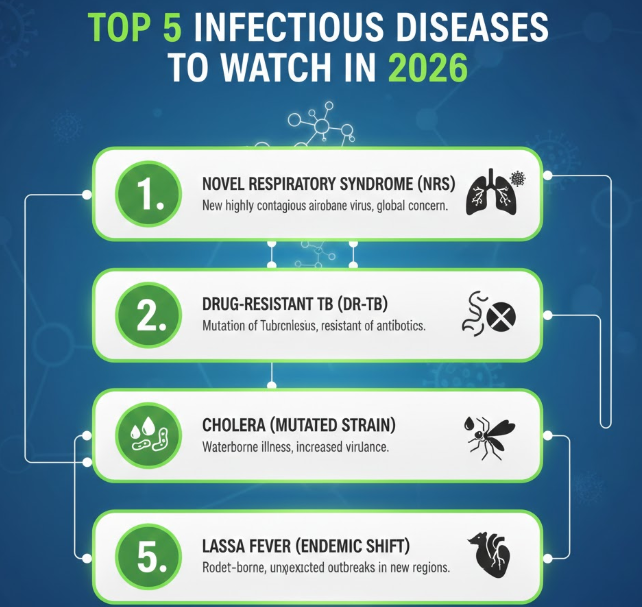
In this article, we will explore the top 5 infectious diseases to watch in 2026, along with practical prevention strategies and preparedness tips.
Why Infectious Diseases Remain a Global Concern
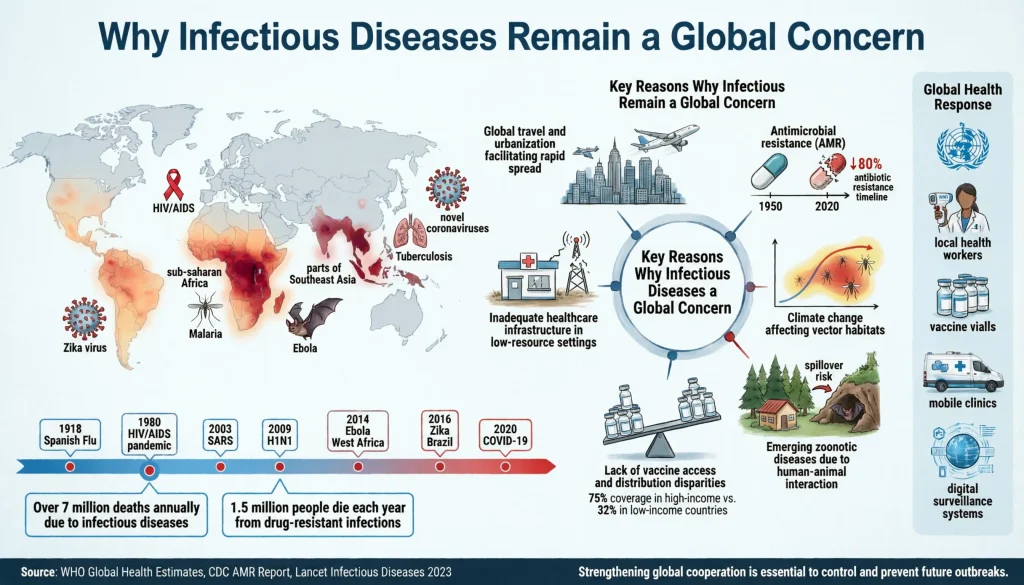
Infectious diseases spread through bacteria, viruses, fungi, or parasites. They can transmit through:
- Air (respiratory droplets)
- Contaminated food or water
- Direct physical contact
- Insect bites (mosquitoes, ticks)
- Blood and bodily fluids
Several global factors increase risks:
- Increased international travel
- Climate change affecting mosquito populations
- Overuse of antibiotics leading to resistance
- Population density in urban areas
To understand disease transmission better, you can read our guide on how infectious diseases spread globally.
1. COVID-19 Variants
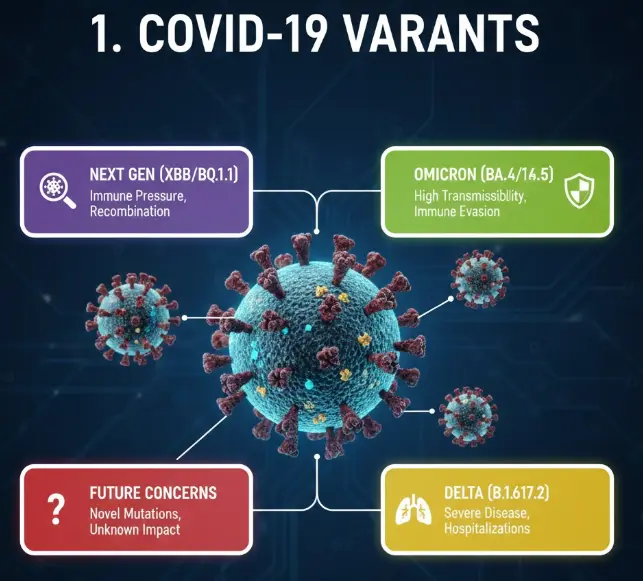
Although the world has learned to manage COVID-19, the virus continues to mutate. New variants may emerge with higher transmissibility or partial resistance to immunity.
Why It Matters in 2026
- Ongoing mutations
- Seasonal waves
- Vaccine adaptation challenges
- Long COVID concerns
Common Symptoms
- Fever
- Cough
- Fatigue
- Loss of taste or smell
- Shortness of breath
Prevention
- Stay updated on booster vaccinations
- Maintain hygiene
- Wear masks in high-risk settings
- Improve indoor ventilation
Public health authorities continue to monitor variants closely.
2. Avian Influenza (Bird Flu)
Avian influenza strains have raised global concerns due to potential mutation and human transmission.
Why It’s Being Monitored
- Increasing outbreaks in poultry
- Rare human cases
- Potential mutation risk
Symptoms in Humans
- Fever
- Muscle aches
- Respiratory symptoms
- Eye irritation (in some cases)
Prevention
- Avoid contact with sick birds
- Cook poultry thoroughly
- Follow travel advisories
Read our article on how zoonotic diseases spread from animals to humans to understand more.
3. Dengue Fever
Dengue continues expanding due to climate change and mosquito spread into new regions.
Why 2026 Is Critical
- Rising global temperatures
- Expanding mosquito habitats
- Increasing case numbers worldwide
Symptoms
- High fever
- Severe headache
- Joint and muscle pain
- Skin rash
Prevention
- Use mosquito repellents
- Remove standing water
- Wear protective clothing
- Install window screens
Community-level mosquito control is essential.
4. Antimicrobial-Resistant Infections (Superbugs)
Antibiotic resistance is considered one of the most serious health threats globally.
Why It’s Dangerous
- Bacteria evolve resistance
- Fewer effective treatment options
- Longer hospital stays
- Higher mortality rates
Causes
- Overuse of antibiotics
- Incomplete treatment courses
- Misuse in livestock
Prevention
- Use antibiotics only when prescribed
- Complete full treatment courses
- Promote hygiene practices
- Support vaccination programs
For more details, read our guide on how antibiotic resistance develops.
5. Tuberculosis (Drug-Resistant TB)
Tuberculosis remains one of the leading infectious killers globally, especially drug-resistant strains.
Why TB Is Still a Threat
- Drug resistance
- Delayed diagnosis
- Weakened healthcare systems in some regions
Symptoms
- Persistent cough
- Weight loss
- Night sweats
- Fatigue
Prevention
- Early screening
- Proper treatment adherence
- Public awareness
- Strengthening health systems
Global Factors Driving Infectious Disease Risks in 2026
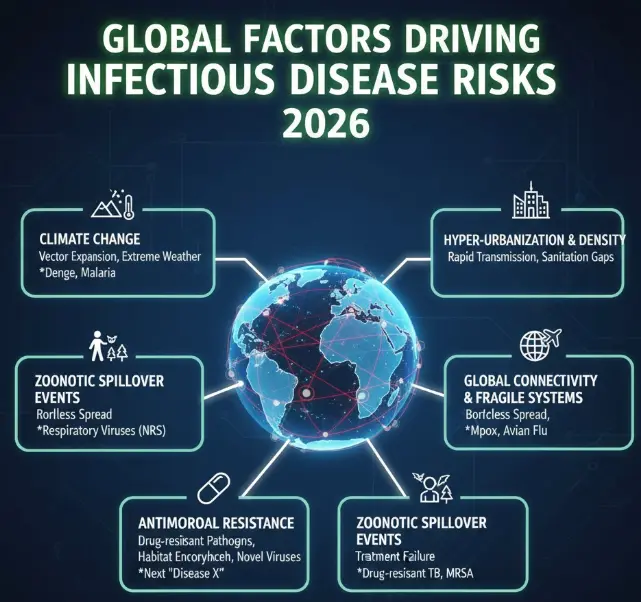
Several interconnected factors increase risks:
Climate Change
Warmer temperatures expand mosquito habitats and alter disease patterns.
Urbanization
Crowded cities facilitate faster spread.
Global Travel
Diseases can cross continents within hours.
Weak Health Systems
Limited access to healthcare delays detection and response.
How Individuals Can Prepare
Even though many diseases are global issues, individuals can reduce risk.
1. Stay Informed
Follow trusted health organizations.
2. Maintain Hygiene
- Wash hands regularly
- Avoid close contact with sick individuals
3. Strengthen Immunity
- Balanced diet
- Regular exercise
- Adequate sleep
4. Vaccination
Stay up to date with recommended vaccines.
5. Travel Awareness
Check health advisories before international trips.
The Role of Governments and Health Authorities
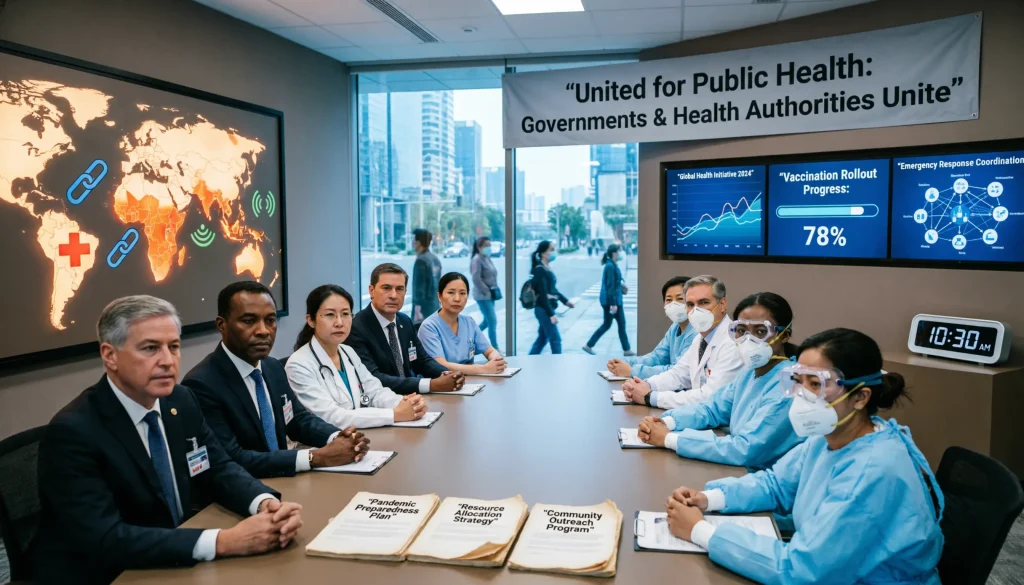
Governments must:
- Invest in surveillance systems
- Improve laboratory capacity
- Fund vaccine research
- Promote responsible antibiotic use
- Educate communities
Global cooperation remains essential.
The Importance of Early Detection
Early diagnosis:
- Reduces spread
- Improves recovery outcomes
- Prevents complications
- Limits healthcare burden
Technology, including AI-based monitoring, is playing an increasing role in outbreak prediction.
Lessons Learned from Past Pandemics
The COVID-19 pandemic taught us:
- Preparedness matters
- Transparency builds trust
- Rapid vaccine development is possible
- Community cooperation is critical
These lessons shape current disease monitoring strategies.
What are the most dangerous infectious diseases in 2026?
COVID-19 variants, dengue fever, drug-resistant tuberculosis, antimicrobial-resistant infections, and avian influenza are among the most monitored.
Are new pandemics expected in 2026?
Experts monitor risks continuously, but strong surveillance systems reduce the chances of large-scale pandemics.
How can I protect my family?
Maintain hygiene, stay updated on vaccinations, and follow public health advice.
Why is antibiotic resistance increasing?
Overuse and misuse of antibiotics contribute to bacterial resistance.
Does climate change affect infectious diseases?
Yes, climate change expands mosquito habitats and alters transmission patterns.
Conclusion
Infectious diseases remain unpredictable but manageable with awareness, preparation, and cooperation. The top 5 infectious diseases to watch in 2026 highlight the importance of global monitoring and individual responsibility.
By staying informed, maintaining preventive habits, and supporting public health initiatives, individuals can significantly reduce risks. Preparedness is not just a government responsibility . it is a shared global commitment.