
Introduction
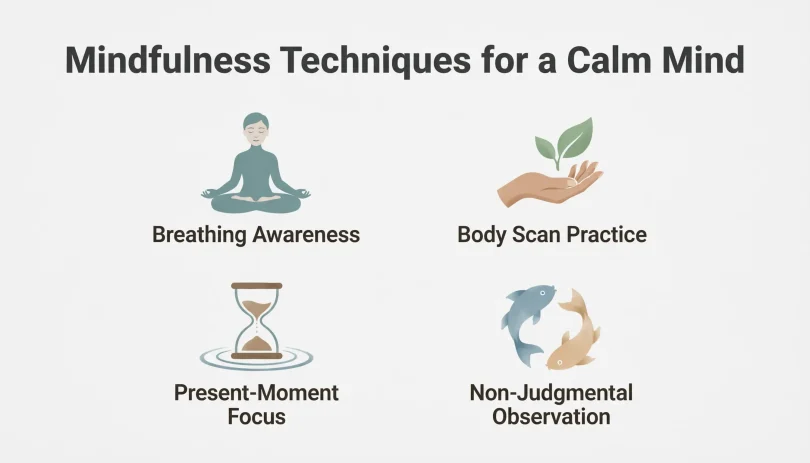
Mindfulness Techniques for a Calm Mind are essential for managing stress, improving focus, and enhancing overall well-being. In today’s fast-paced world, people often feel overwhelmed with work, responsibilities, and distractions. Practicing mindfulness helps bring attention to the present moment, reduces anxiety, and fosters emotional balance. By understanding and applying mindfulness techniques, anyone can develop a calmer and more centered mind.
Learning how to practice mindfulness daily can seem challenging at first, but with simple exercises and consistent practice, it becomes easier. These mindfulness strategies are not only for meditation experts—they are practical tools for beginners and intermediates alike. In this guide, we will explore various techniques, step-by-step instructions, benefits, potential risks, common mistakes, FAQs, and expert tips that will help you incorporate mindfulness into your daily life effectively.
What is Mindfulness Techniques for a Calm Mind?
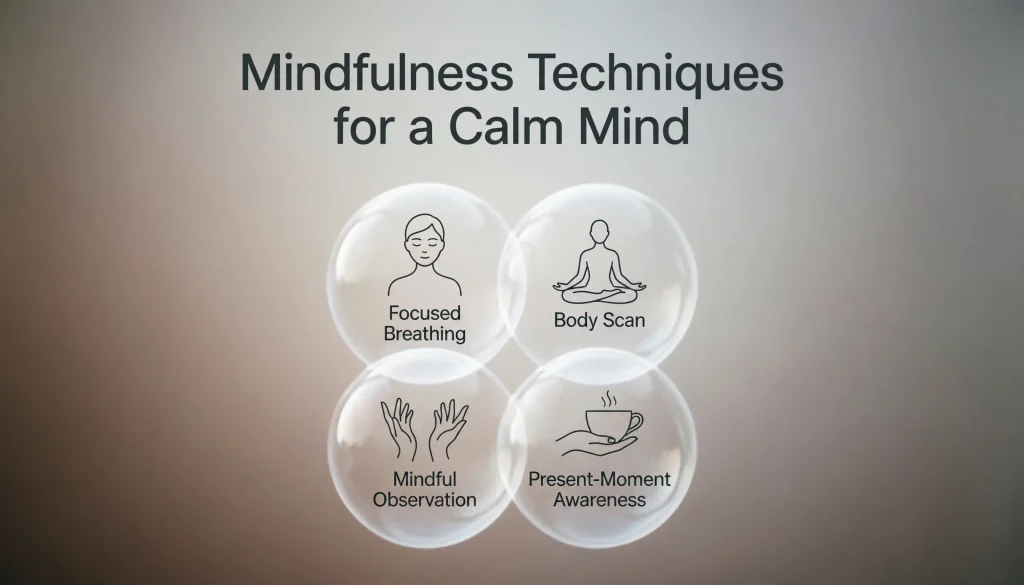
Mindfulness Techniques for a Calm Mind refer to intentional practices that help individuals focus on the present moment without judgment. These techniques often involve observing thoughts, feelings, and bodily sensations with awareness and acceptance. Mindfulness is not about emptying the mind but rather noticing thoughts without getting attached to them.
Some common methods include meditation, deep breathing, guided visualization, and mindful movement. Simple mindfulness exercises for beginners may include focusing on the breath for a few minutes, observing the environment, or paying attention to daily activities like eating or walking. These practices enhance self-awareness, reduce stress, and improve mental clarity.
Why is Mindfulness Techniques for a Calm Mind Important?
Mindfulness Techniques for a Calm Mind are important for several reasons:
- Stress Reduction: Mindfulness helps calm the nervous system and reduces anxiety.
- Emotional Balance: Regular practice allows better control over reactions to negative emotions.
- Enhanced Focus: Mindfulness improves concentration and productivity.
- Better Sleep: Mindfulness techniques help relax the mind before bedtime.
- Overall Well-being: Practicing mindfulness daily strengthens resilience and improves quality of life.
By integrating mindfulness into daily routines, individuals can respond to challenges calmly rather than reacting impulsively. These techniques also encourage healthier habits, including better sleep, nutrition, and social interactions.
Detailed Step-by-Step Guide
Step 1: Start with Breathing Exercises
Focusing on your breath is the simplest and most effective mindfulness technique.
How to practice mindfulness daily using breath:
- Sit or lie down comfortably.
- Close your eyes and inhale deeply through your nose for four counts.
- Hold your breath for two counts.
- Exhale slowly for six counts.
- Repeat for 5–10 minutes daily.
Breathing exercises reduce stress hormones and bring attention to the present moment, which is the foundation of mindfulness.
Step 2: Practice Body Scan Meditation
A body scan helps identify areas of tension and promotes relaxation.
Simple mindfulness exercises for beginners:
- Lie down comfortably and close your eyes.
- Focus on each body part from head to toes.
- Notice sensations, tightness, or discomfort without judgment.
- Breathe deeply and release tension in each area.
This technique improves mind-body awareness and encourages relaxation.
Step 3: Mindful Walking
Walking mindfully combines movement with meditation, helping reduce stress while staying active.
Steps:
- Walk slowly in a quiet space.
- Focus on the sensation of your feet touching the ground.
- Observe your surroundings, sounds, and smells without judgment.
- Breathe deeply and maintain awareness of each step.
Mindful walking can be done indoors or outdoors and is particularly helpful for those who find sitting meditation challenging.
Step 4: Guided Visualization
Visualization involves creating mental images of calming scenes to reduce stress and improve focus.
How to practice mindfulness daily with visualization:
- Sit or lie down in a quiet space.
- Close your eyes and imagine a peaceful place (e.g., beach, forest, or mountain).
- Engage all your senses—feel the breeze, hear the waves, smell the forest.
- Focus on this scene for 5–15 minutes, allowing your mind to relax.
Guided visualization can help manage anxiety, improve mood, and increase emotional stability.
Step 5: Mindful Eating
Mindful eating encourages attention to food, improving digestion and awareness.
Steps:
- Choose one meal to eat mindfully.
- Observe the colors, textures, and aromas of your food.
- Take small bites and chew slowly.
- Notice the taste and how your body feels while eating.
This practice promotes gratitude, reduces overeating, and strengthens the connection between mind and body.
Step 6: Journaling and Reflection
Mindfulness also includes self-reflection to enhance awareness of thoughts and emotions.
Steps:
- Take 5–10 minutes daily to write down your thoughts and feelings.
- Observe patterns, triggers, and emotional reactions.
- Reflect on positive experiences and gratitude moments.
Journaling supports mental clarity and emotional resilience.
Step 7: Incorporate Short Mindfulness Breaks
Even brief mindfulness breaks during the day can reduce stress.
Examples:
- Focus on your breath for 1–2 minutes at your desk.
- Stretch mindfully while paying attention to body sensations.
- Listen carefully to ambient sounds without distractions.
These mini-breaks refresh the mind and improve focus.
Benefits of Mindfulness Techniques for a Calm Mind
- Reduces stress and anxiety
- Improves focus and concentration
- Enhances emotional regulation
- Promotes better sleep quality
- Strengthens resilience against daily stressors
- Supports physical health by reducing tension
- Encourages positive thinking and gratitude
- Increases overall life satisfaction
The benefits grow stronger with consistent practice, even if started with just 5–10 minutes daily.
Disadvantages / Risks
- Initial difficulty focusing for beginners
- Feeling frustrated if progress is slow
- Emotional discomfort when confronting negative thoughts
- Risk of ignoring professional mental health care if used exclusively
Mindfulness is a tool, not a replacement for therapy or medical treatment when needed.
Common Mistakes to Avoid
- Expecting instant results
- Trying to empty the mind completely
- Skipping daily practice
- Comparing your progress to others
- Practicing only when stressed
- Ignoring guidance from reliable sources
Avoiding these mistakes ensures more effective and sustainable mindfulness practice.
How long should I practice mindfulness daily?
Start with 5–10 minutes and gradually increase to 20–30 minutes as you feel comfortable.
Can mindfulness help with anxiety?
Yes, mindfulness reduces stress and helps manage anxiety by increasing present-moment awareness.
Is guided meditation better than self-practice?
Both are effective. Beginners often find guided sessions easier, while experienced practitioners may prefer self-practice.
Can children practice mindfulness?
Absolutely. Simple mindfulness exercises for beginners, such as breathing or visualization, work well for children.
How soon can I see benefits?
Many notice immediate calm after a session, but long-term benefits require consistent daily practice.
Do I need a quiet place?
While quiet environments help, mindfulness can be practiced anywhere by focusing attention and awareness.
Expert Tips & Bonus Points
- Schedule a specific time daily for mindfulness practice.
- Use reminders to maintain consistency.
- Combine mindfulness with light exercise like yoga or stretching.
- Observe thoughts without judgment; let them come and go naturally.
- Pair mindfulness with journaling to track progress.
- Stay patient—mindfulness is a lifelong skill.
Conclusion
Mindfulness Techniques for a Calm Mind are powerful tools for enhancing mental clarity, reducing stress, and promoting emotional well-being. By incorporating simple daily exercises such as mindful breathing, body scans, guided visualization, mindful walking, and journaling, anyone can develop a calmer, more focused mind.
Consistent practice strengthens emotional resilience, improves sleep, and increases overall life satisfaction. Beginners should start small, gradually increasing practice time, and avoid common mistakes like rushing or expecting immediate results. Remember, mindfulness is not about perfection but awareness. By dedicating time each day to these techniques, individuals can experience profound changes in mood, focus, and overall quality of life.
Mindfulness is accessible, practical, and adaptable. By using these strategies, you can cultivate a calm mind, manage stress effectively, and lead a more balanced, peaceful life.