
Introduction
Recognizing Symptoms of Depression Early is one of the most important steps in protecting your mental health. Depression does not usually appear suddenly. Instead, it develops slowly, often starting with small emotional or behavioral changes that many people ignore. When these early signs are not noticed, the condition may worsen and begin to affect daily life, relationships, sleep, work, and overall well-being.
Many people struggle to understand how to identify depression symptoms before they become serious. Some think sadness is normal stress, while others believe they should simply “stay strong.” However, learning to recognize the warning signs of clinical depression can make a major difference. Early awareness allows individuals to seek help, adjust habits, and build emotional support systems. This guide explains common symptoms, practical steps, risks, and expert advice in simple language so anyone can understand and take action confidently.
What is Recognizing Symptoms of Depression Early?
Recognizing Symptoms of Depression Early means identifying emotional, physical, and behavioral changes that may signal the beginning of depression. Depression is more than just feeling sad. It is a mental health condition that affects mood, thoughts, energy, and daily functioning.
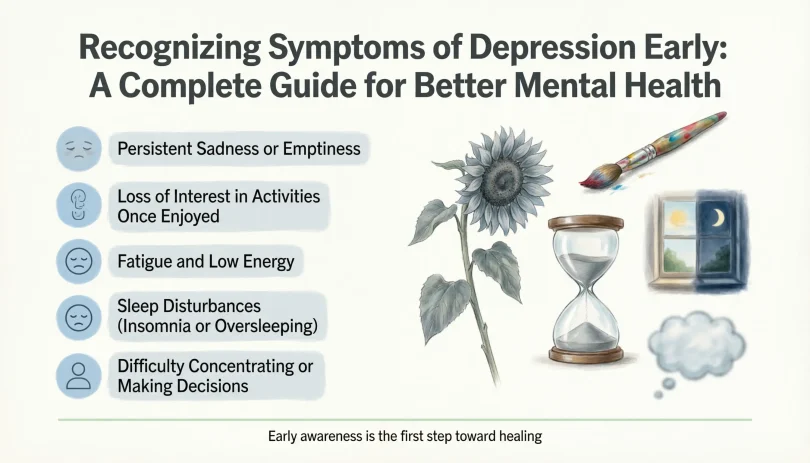
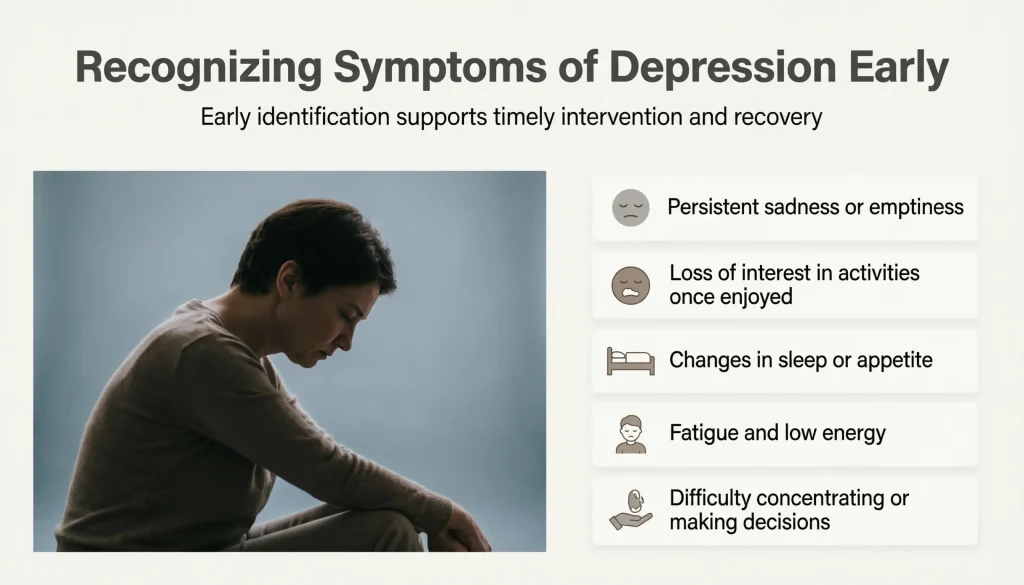
Early symptoms often include:
- Persistent sadness or emptiness
- Loss of interest in activities
- Changes in sleep patterns
- Fatigue or low energy
- Difficulty concentrating
Understanding how to identify depression symptoms helps prevent the condition from becoming severe. Early recognition gives individuals time to respond before it affects major life areas.
Why is Recognizing Symptoms of Depression Early Important?

Recognizing Symptoms of Depression Early is important because untreated depression can lead to serious emotional and physical health problems. When ignored, symptoms may intensify and disrupt work performance, relationships, and self-esteem.
Early detection helps:
- Prevent worsening symptoms
- Reduce risk of long-term mental health issues
- Improve recovery time
- Strengthen emotional resilience
- Encourage healthy coping strategies
Recognizing the warning signs of clinical depression early allows people to seek professional support and adopt lifestyle changes sooner rather than later.
Detailed Step-by-Step Guide
Step 1: Notice Changes in Mood
The first step in Recognizing Symptoms of Depression Early is observing mood changes.
Ask yourself:
- Do I feel sad most of the day?
- Do I feel hopeless without clear reason?
- Am I more irritable than usual?
Persistent sadness lasting more than two weeks may indicate early depression.
Step 2: Pay Attention to Sleep Patterns
Sleep changes are common early signs.
Look for:
- Sleeping too much
- Difficulty falling asleep
- Waking up frequently at night
- Feeling tired even after sleeping
Following tips for better sleep at night can help improve mood, but ongoing sleep disruption may signal depression.
Step 3: Monitor Energy Levels
Low energy is a key symptom. Even simple tasks may feel overwhelming.
You may notice:
- Constant fatigue
- Lack of motivation
- Slower movement or thinking
Recognizing this early helps prevent further emotional exhaustion.
Step 4: Identify Loss of Interest
If hobbies or activities no longer feel enjoyable, this may be an early sign.
Examples include:
- Avoiding social gatherings
- Losing interest in favorite hobbies
- Feeling disconnected from family
Learning how to identify depression symptoms includes watching for loss of pleasure.
Step 5: Observe Appetite Changes
Depression can change eating habits.
Some people:
- Eat significantly less
- Lose interest in food
- Overeat for comfort
Sudden appetite changes combined with mood shifts should not be ignored.
Step 6: Notice Difficulty Concentrating
Depression affects thinking patterns.
Signs include:
- Trouble focusing at work
- Forgetfulness
- Difficulty making decisions
These mental changes are part of early warning signs of clinical depression.
Step 7: Evaluate Self-Talk
Negative self-talk often increases.
Examples:
- Feeling worthless
- Excessive guilt
- Harsh self-criticism
Recognizing Symptoms of Depression Early includes becoming aware of harmful internal thoughts.
Step 8: Assess Physical Symptoms
Depression may cause physical discomfort.
You may experience:
- Headaches
- Body aches
- Digestive problems
When medical tests show no clear cause, emotional health may be involved.
Step 9: Check Social Withdrawal
Isolation is common in early depression.
You may:
- Avoid phone calls
- Cancel plans
- Prefer being alone frequently
Social withdrawal can increase severity if not addressed.
Step 10: Seek Professional Evaluation
If multiple symptoms persist for more than two weeks, consider professional guidance.
Mental health professionals can:
- Provide proper diagnosis
- Suggest therapy options
- Recommend coping strategies
Early action makes recovery smoother.
Benefits of Recognizing Symptoms of Depression Early

- Faster treatment and recovery
- Reduced emotional suffering
- Improved relationships
- Better work performance
- Stronger self-awareness
- Lower risk of severe depression
- Improved sleep and daily routine
Early recognition empowers individuals to take control of their mental health.
Disadvantages / Risks
- Misinterpreting temporary sadness as depression
- Self-diagnosing without professional advice
- Ignoring symptoms due to fear or stigma
- Delaying medical consultation
Balance awareness with professional evaluation for accurate understanding.
Common Mistakes to Avoid
- Ignoring symptoms for months
- Believing depression is weakness
- Avoiding open communication
- Using unhealthy coping methods
- Relying only on internet research
- Expecting symptoms to disappear automatically
Avoiding these mistakes improves early intervention success.
How long should symptoms last before concern?
If symptoms persist for two weeks or more, professional consultation is recommended.
Is sadness always depression?
No. Sadness is normal, but persistent sadness with other symptoms may indicate depression.
Can sleep problems alone indicate depression?
Not always, but ongoing sleep disruption combined with mood changes can be a sign.
How can I help someone showing warning signs?
Listen without judgment, encourage professional help, and offer emotional support.
Can lifestyle changes help early depression?
Yes. Exercise, balanced diet, and tips for better sleep at night can support recovery.
When should professional help be urgent?
If symptoms worsen rapidly or include thoughts of self-harm, immediate professional support is essential.
Expert Tips & Bonus Points
- Keep a mood journal to track patterns
- Maintain regular sleep schedule
- Stay physically active
- Practice mindfulness daily
- Limit alcohol and excessive screen time
- Maintain open communication with trusted individuals
Small consistent habits combined with awareness strengthen mental resilience.
Conclusion
Recognizing Symptoms of Depression Early plays a crucial role in protecting mental health and preventing long-term complications. Depression often begins with subtle emotional and physical changes that many people overlook. By understanding how to identify depression symptoms and recognizing warning signs of clinical depression, individuals can respond before the condition becomes severe.
Early awareness encourages timely professional support, healthy coping strategies, and lifestyle adjustments that improve overall well-being. Simple actions such as maintaining good sleep habits, staying socially connected, and monitoring mood changes can make a significant difference. Mental health is just as important as physical health, and taking early signs seriously demonstrates strength, not weakness.
With knowledge, awareness, and proactive steps, recognizing symptoms early can lead to faster recovery, stronger resilience, and a healthier, more balanced life.