
Introduction
Understanding heart diseases and their risk factors is essential for protecting your heart and living a longer, healthier life. Heart disease is one of the leading causes of death worldwide. Many people do not realize that small daily habits can increase their risk over time.
By understanding heart diseases and their risk factors, you can take early action. Prevention is always better than treatment. When you know the warning signs and causes, you can reduce serious complications.
What Are Heart Diseases?
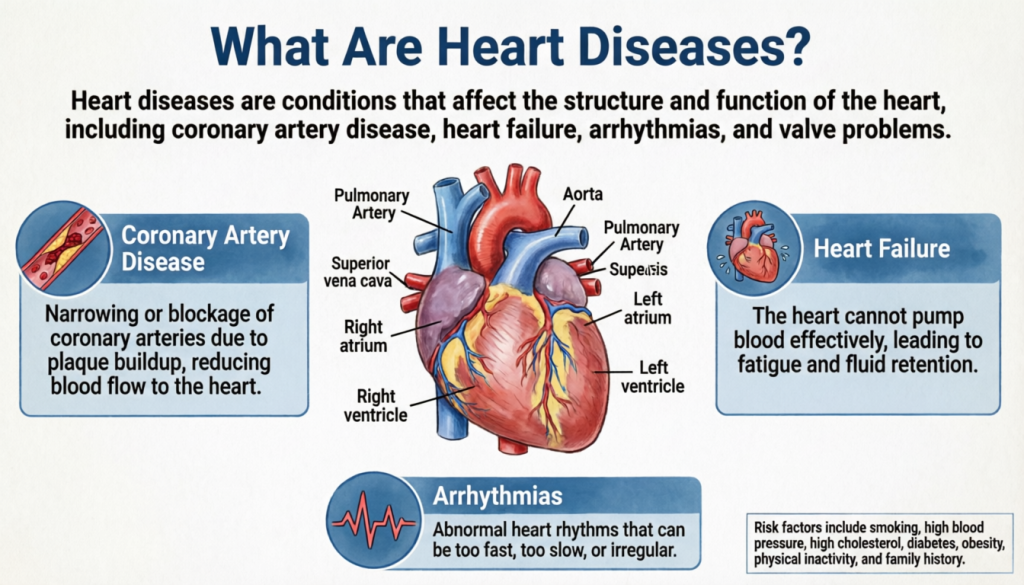
Heart diseases refer to several conditions that affect the heart and blood vessels. The most common type is coronary artery disease, which happens when arteries become narrow or blocked. Other types include heart failure, arrhythmia, and congenital heart defects.
Understanding heart diseases and their risk factors helps people identify problems before they become life-threatening.
Why Understanding Heart Diseases and Their Risk Factors Is Important
Many heart conditions develop slowly. At first, there may be no clear symptoms. That is why understanding heart diseases and their risk factors is important for early prevention.
When people ignore risk factors such as high blood pressure or cholesterol, the damage continues silently. Awareness can literally save lives.
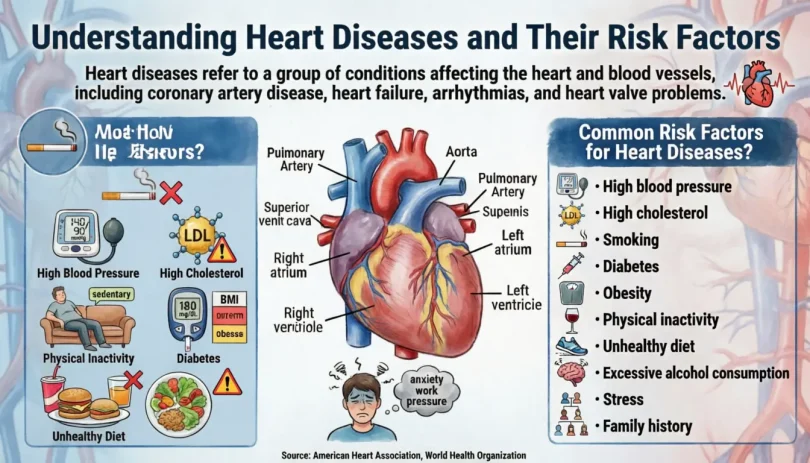
10 Major Risk Factors for Heart Disease
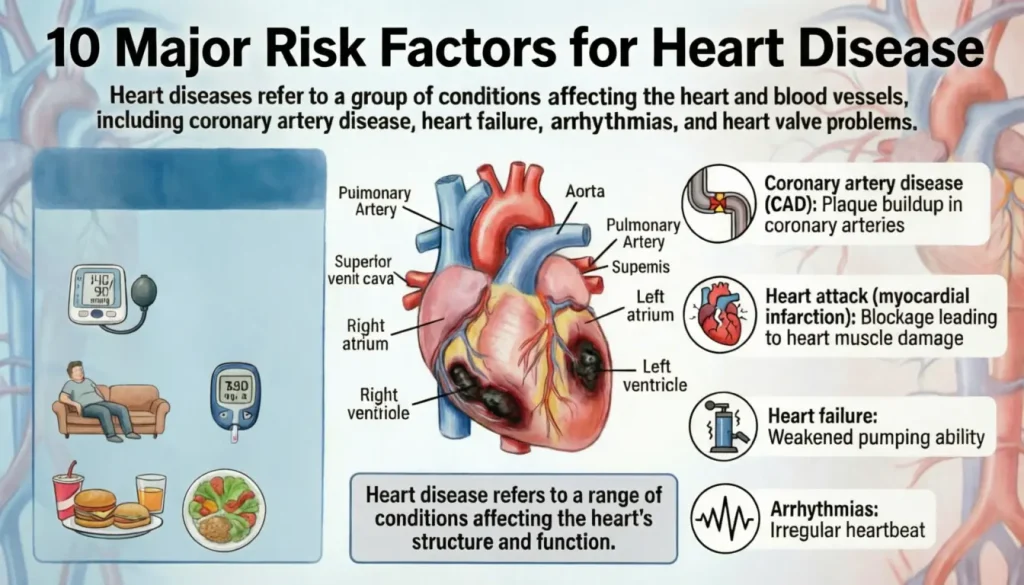
- High Blood Pressure
- High Cholesterol
- Smoking
- Diabetes
- Obesity
- Physical Inactivity
- Unhealthy Diet
- Excessive Alcohol
- Chronic Stress
- Family History
- Each of these increases strain on the heart. Understanding heart diseases and their risk factors allows you to control many of these conditions naturally.
Common Warning Signs
- Chest pain or discomfort
- Shortness of breath
- Fatigue
- Irregular heartbeat
- Swelling in legs
- Dizziness
If you notice these symptoms, seek medical advice immediately.
How to Reduce the Risk Naturally
Maintain a Healthy Diet
Eat fruits, vegetables, whole grains, and lean proteins. Reduce salt and processed foods. A balanced diet supports heart disease prevention.
Exercise Regularly
At least 30 minutes of moderate exercise daily improves circulation and strengthens the heart.
Quit Smoking
Smoking damages blood vessels and increases heart disease risk significantly.
Manage Stress
Practice deep breathing, meditation, or light physical activity. Chronic stress increases blood pressure.
Regular Check-Ups
Monitoring blood pressure, cholesterol, and blood sugar helps detect issues early.
Benefits of Prevention
- Lower risk of heart attack
- Better energy levels
- Improved blood circulation
- Reduced medical expenses
- Longer lifespan
Common Mistakes to Avoid
- Ignoring mild chest discomfort
- Depending only on medication
- Skipping regular health tests
- Eating unhealthy food frequently
- Avoiding physical activity
Understanding Heart Diseases and Their Risk Factors: 10 Warning Signs
Understanding heart diseases and their risk factors is essential for protecting your heart and living a longer, healthier life. Heart disease is one of the leading causes of death worldwide. Many people do not realize that small daily habits can increase their risk over time.
By understanding heart diseases and their risk factors, you can take early action. Prevention is always better than treatment. When you know the warning signs and causes, you can reduce serious complications.
Expert Tips
- Drink enough water daily
- Maintain a healthy weight
- Sleep 7–8 hours
- Limit sugar intake
- Stay physically active
Conclusion
Understanding heart diseases and their risk factors is the first step toward prevention. Many heart problems develop silently, but awareness gives you control. By improving your diet, staying active, managing stress, and scheduling regular check-ups, you can significantly lower your risk.
When you focus on understanding heart diseases and their risk factors, you protect not only your heart but your overall health. Small daily improvements can lead to long-term benefits and a healthier future.