
Introduction
Heart diseases are among the leading causes of death worldwide. They include a range of conditions that affect the heart, such as coronary artery disease, arrhythmias, and heart failure. Understanding heart diseases and their risk factors is crucial for early prevention and better management of heart health.
Many people are unaware of the risks that lifestyle and genetics pose to their heart. By learning about heart disease prevention, recognizing risk factors, and adopting natural remedies for heart health, individuals can significantly reduce their chances of serious complications. This guide will explain heart diseases in simple terms, outline key risk factors, and provide practical tips to maintain a healthy heart.
What Are Heart Diseases?
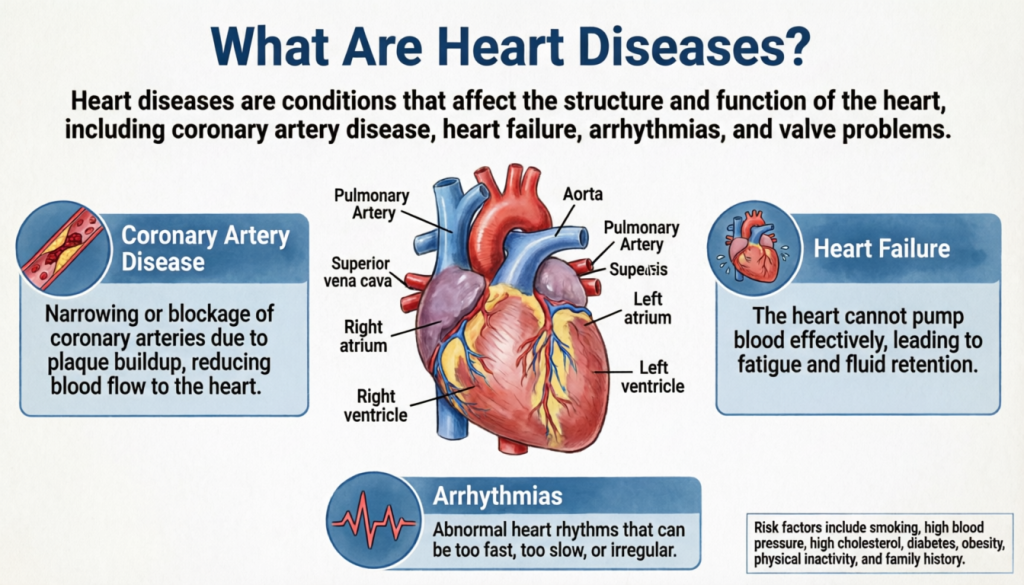
Heart diseases, also called cardiovascular diseases, refer to conditions that affect the heart and blood vessels. The most common types include:
- Coronary artery disease: Blocked or narrowed arteries that reduce blood flow
- Heart attack (myocardial infarction): Occurs when blood flow to the heart is blocked
- Arrhythmias: Irregular heartbeats that may cause complications
- Heart failure: The heart is unable to pump blood efficiently
- Congenital heart defects: Present at birth affecting heart structure
Recognizing these conditions early helps in heart disease prevention and maintaining overall cardiovascular health.
Common Risk Factors for Heart Diseases
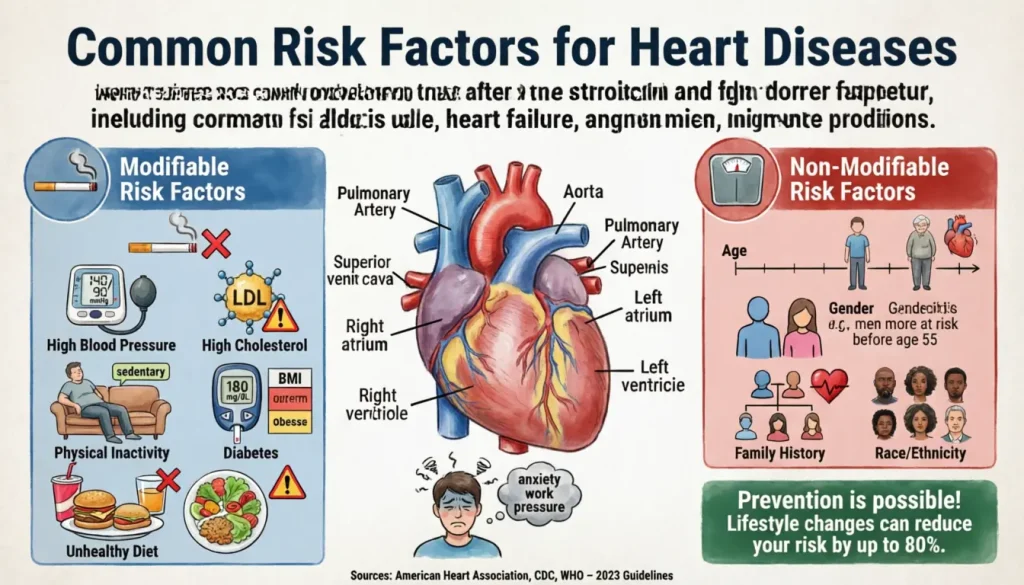
Certain factors increase the likelihood of developing heart diseases. These include:
- High blood pressure (hypertension) – a major risk factor
- High cholesterol levels – leads to plaque buildup in arteries
- Diabetes – increases strain on the heart
- Obesity and overweight – affects heart efficiency
- Smoking and alcohol consumption – damages arteries
- Poor diet – high in salt, sugar, and unhealthy fats
- Physical inactivity – reduces heart strength
- Family history – genetics plays a role
- Stress and poor mental health – increases heart strain
Awareness of these risk factors for heart disease helps in early intervention and prevention.
How to Prevent Heart Diseases Naturally
Maintain a Heart-Healthy Diet
Eating right is essential for natural heart disease prevention:
- Include fruits, vegetables, whole grains, and lean proteins
- Use healthy fats like olive oil and avocado
- Reduce salt and sugar intake
- Avoid processed and fried foods
- Include foods rich in omega-3 fatty acids, potassium, and fiber
Exercise Regularly
Physical activity strengthens the heart and improves blood flow:
- Aim for 30 minutes of moderate exercise daily
- Activities like walking, jogging, swimming, and cycling
- Include strength and flexibility exercises
- Exercise helps manage weight, blood pressure, and cholesterol naturally
Manage Stress Effectively
Chronic stress can increase heart disease risk:
- Practice meditation, deep breathing, or yoga
- Engage in hobbies like reading or music
- Maintain adequate sleep
- Avoid prolonged exposure to stressful situations
Avoid Smoking and Limit Alcohol
Lifestyle choices greatly impact heart health:
- Quit smoking completely
- Avoid secondhand smoke
- Limit alcohol consumption to moderate levels
These are key natural remedies for heart health.
Regular Health Check-Ups
Monitoring your heart health helps in early detection:
- Check blood pressure and cholesterol levels regularly
- Maintain a diary of heart-related health readings
- Consult your doctor for personalized preventive care
Benefits of Preventing Heart Diseases
- Lower risk of heart attack and stroke
- Improved energy levels and overall well-being
- Better weight management and metabolism
- Reduced dependence on medications
- Longer, healthier life
Common Mistakes to Avoid
- Ignoring early warning signs like chest pain or fatigue
- Relying solely on medications without lifestyle changes
- Eating unhealthy diets consistently
- Skipping regular health screenings
- Neglecting stress and mental health
What are the main causes of heart diseases?
High blood pressure, high cholesterol, diabetes, obesity, smoking, poor diet, and stress are the main causes.
Can heart diseases be prevented naturally?
Yes, with healthy lifestyle changes, regular exercise, a balanced diet, and stress management, heart diseases can often be prevented.
What foods are best for heart health?
Fruits, vegetables, whole grains, lean proteins, nuts, and foods rich in omega-3 fatty acids.
How often should I check my heart health?
At least once a year, or more frequently if you have risk factors.
Does stress affect the heart?
Yes, chronic stress increases blood pressure and heart strain, raising the risk of heart disease.
Can exercise reduce the risk of heart diseases?
Absolutely. Regular physical activity strengthens the heart, lowers blood pressure, and improves circulation.
Expert Tips & Bonus Points
- Maintain a healthy diet and avoid processed foods
- Engage in daily exercise for at least 30 minutes
- Limit alcohol and quit smoking
- Practice stress management techniques
- Schedule regular health check-ups
- Educate family and friends about heart disease prevention
Conclusion
Understanding heart diseases and their risk factors is the first step towards a healthier life. By adopting natural remedies for heart health, making lifestyle changes for hypertension, and focusing on heart disease prevention, you can significantly reduce the risk of serious complications.
Consistent efforts like eating a balanced diet, exercising regularly, managing stress, and monitoring your health are key to a strong, healthy heart and improved quality of life.