
Introduction
As we move into 2026, global health experts are closely monitoring how a new virus spreads across different regions. Many people are asking, “Is there a new virus we should worry about?” While medical science has advanced significantly, infectious diseases continue to evolve. Viruses mutate, bacteria become resistant to treatment, and climate change alters the way infections travel. Because of this, understanding how a new virus spreads is more important than ever.
In recent years, the world has already experienced the impact of a new pandemic. That experience changed how governments, hospitals, and individuals respond to outbreaks. Now, attention has shifted toward identifying possible threats early and preventing another new virus pandemic. This article explores the top five infectious diseases to watch in 2026, why they matter, how they spread, and what steps you can take to stay protected. The goal is not to create fear, but to promote awareness and preparedness.
What is Top 5 Infectious Diseases to Watch in 2026?
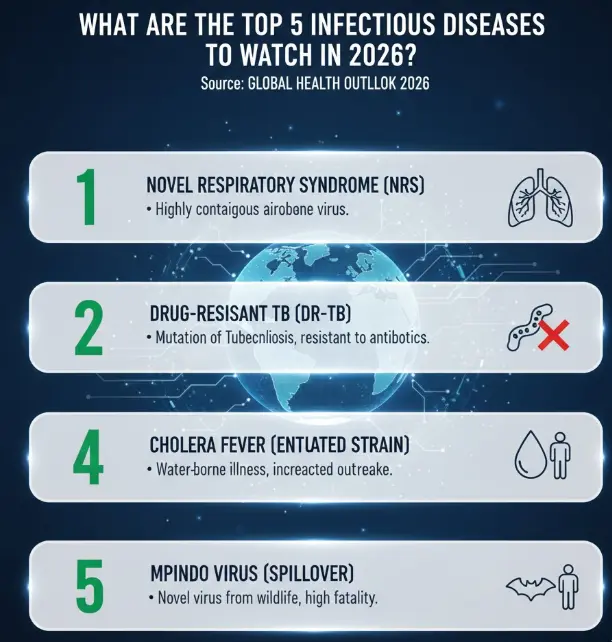
The phrase “Top 5 Infectious Diseases to Watch in 2026” refers to the most concerning infections that experts believe could cause significant health challenges this year. These diseases are monitored because of their transmission rates, mutation patterns, or global spread potential.
When discussing how a new virus spreads, it usually involves:
- Respiratory droplets from coughing or sneezing
- Close personal contact
- Contaminated surfaces
- Animal-to-human transmission
- Mosquito or insect bites
Some infections are completely new, while others are older diseases returning in stronger forms. For example, scientists are studying emerging respiratory viruses, drug-resistant tuberculosis, dengue fever, avian influenza, and antimicrobial-resistant bacterial infections.
Many people ask, “Is there a new virus causing concern in 2026?” Health organizations constantly track new virus spreads to detect unusual patterns. Early detection helps prevent another new pandemic before it becomes uncontrollable.
Why is Top 5 Infectious Diseases to Watch in 2026 Important?
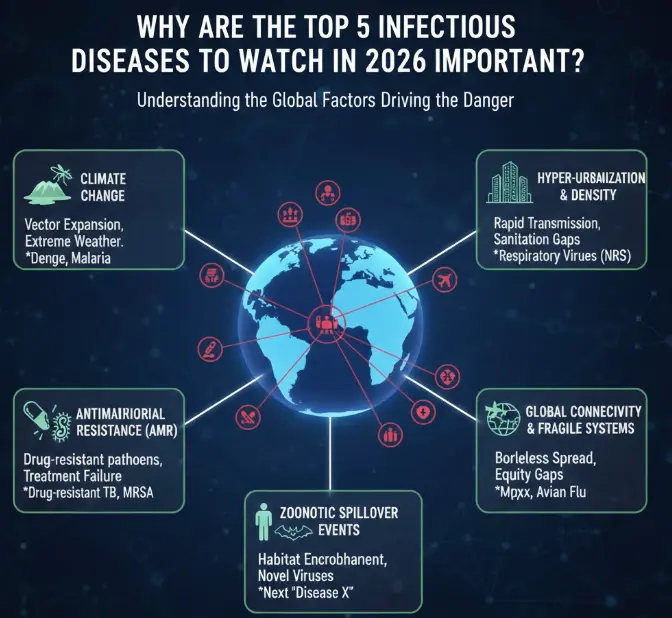
Monitoring infectious diseases is essential for global safety. A new virus spreads quickly in a connected world where international travel happens daily. One infected traveler can unknowingly carry a virus across continents in a few hours.
Here are key reasons why this topic matters:
- Early warning prevents large outbreaks.
- Healthcare systems can prepare resources.
- Vaccines and treatments can be developed faster.
- Public awareness reduces transmission.
- Governments can coordinate globally.
After experiencing a new virus pandemic in recent years, the world understands the importance of preparation. Ignoring early signs can allow a new pandemic to grow silently.
Moreover, climate change is expanding mosquito habitats. Urban crowding increases contact between people. Antibiotic misuse is creating resistant bacteria. All these factors increase the risk when a new virus spreads.
Preparedness saves lives. That is why experts identify potential threats before they escalate.
Detailed Step-by-Step Guide
Step 1: Understand the Five Major Infectious Threats
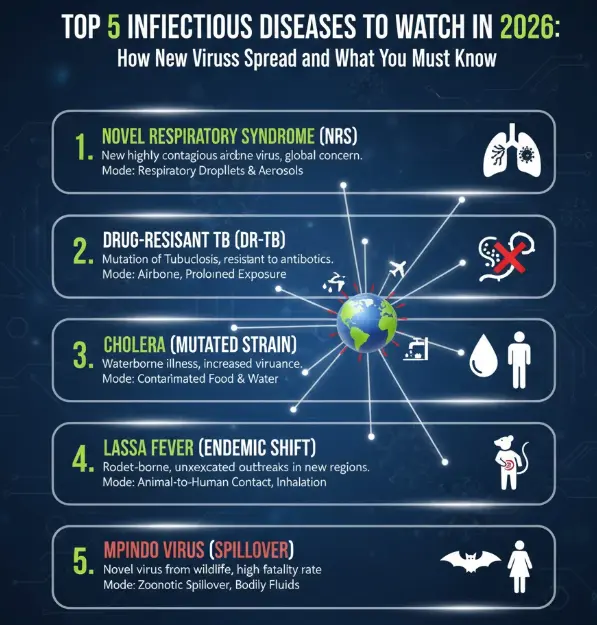
Below are the five infectious diseases experts are closely watching in 2026.
- Emerging Respiratory Viruses
Respiratory viruses remain a primary concern. When a new virus spreads through the air, transmission happens quickly. Variants of existing viruses or entirely new strains can cause waves of infection.
Symptoms often include:
- Fever
- Cough
- Fatigue
- Shortness of breath
Monitoring helps prevent another new virus pandemic.
- Avian Influenza (Bird Flu)
Avian influenza occasionally infects humans. Scientists are watching closely to ensure it does not evolve into a new pandemic strain.
Transmission may occur through:
- Contact with infected birds
- Contaminated environments
- Dengue Fever
Dengue is spreading due to warmer temperatures. Mosquito populations are expanding into new regions, increasing risk.
Common signs include:
- High fever
- Severe headache
- Joint pain
- Drug-Resistant Tuberculosis
Tuberculosis remains deadly when treatment fails. Drug resistance makes management harder and increases long-term risk.
- Antimicrobial-Resistant Bacteria
When antibiotics stop working, routine infections become dangerous. Hospitals are particularly affected.
Step 2: Recognize How Infections Spread
Understanding how a new virus spreads helps reduce exposure.
- Common transmission routes include:
- Airborne droplets
- Physical contact
- Blood or body fluids
- Food and water contamination
- Animal or insect vectors
For example, if there is a new virus pandemic affecting respiratory health, masks and ventilation become critical.
Step 3: Strengthen Personal Prevention Measures
Personal action reduces risk significantly.
- Practical steps include:
- Washing hands regularly
- Staying home when sick
- Getting recommended vaccines
- Avoiding crowded spaces during outbreaks
- Maintaining a strong immune system
When people act responsibly, it slows how a new virus spreads within communities.
Step 4: Stay Informed Without Panic
Many people frequently search, “Is there a new virus?” While staying informed is wise, relying on trusted health authorities is essential.
Avoid spreading unverified rumors. Misinformation can create unnecessary fear during a new pandemic situation.
Step 5: Support Community Health Systems
Prepared communities respond better to outbreaks.
Support includes:
- Participating in vaccination programs
- Encouraging responsible antibiotic use
- Following public health guidelines
When communities cooperate, it reduces the chance of a severe new virus pandemic.
Benefits of Top 5 Infectious Diseases Monitoring
Monitoring infectious diseases offers several benefits:
- Early detection of outbreaks
- Faster vaccine development
- Reduced mortality rates
- Improved global cooperation
- Stronger healthcare infrastructure
- Better public awareness
- Controlled spread when a new virus spreads
- Reduced economic disruption
Preparedness reduces panic and strengthens public confidence.
Disadvantages / Risks
Despite monitoring, risks remain:
- Rapid mutation of viruses
- Global travel accelerating spread
- Antibiotic resistance
- Public misinformation
- Delayed reporting in some regions
- Vaccine hesitancy
- Healthcare inequality
If these risks are ignored, they may contribute to another new pandemic.
Common Mistakes to Avoid
When dealing with infectious disease risks, avoid these common errors:
- Ignoring early symptoms.
- Self-medicating with antibiotics unnecessarily.
- Believing every social media rumor.
- Skipping vaccination schedules.
- Traveling without checking health advisories.
- Assuming a new virus spreads only in certain countries.
Small careless actions can lead to larger consequences during a new virus pandemic.
Is there a new virus in 2026?
Health experts continuously monitor emerging infections. While there may be isolated outbreaks, early detection helps prevent widespread transmission.
How does a new virus spreads so quickly?
Modern travel, crowded cities, and close contact allow viruses to move rapidly between populations.
What increases the risk of a new pandemic?
High mutation rates, global mobility, and weak healthcare systems increase pandemic risk.
Can climate change influence infectious diseases?
Yes. Warmer climates expand mosquito habitats and alter disease patterns.
How can I protect my family?
Maintain hygiene, stay updated on vaccines, and follow official health guidelines.
Are antimicrobial-resistant infections dangerous?
Yes. They make common infections harder to treat and increase hospitalization risks.
Should I worry about every news report about a new virus spreads?
It is important to stay informed but avoid panic. Trust reliable sources.
Expert Tips & Bonus Points
Experts recommend these additional strategies:
- Build strong daily health habits.
- Keep emergency medical supplies at home.
- Improve indoor air quality.
- Encourage workplace hygiene standards.
- Educate children about handwashing.
- Stay updated with official travel guidelines.
Prepared individuals reduce the impact when a new virus spreads.
Furthermore, global collaboration is essential. Sharing scientific research, data transparency, and coordinated vaccine distribution reduce risks of another new virus pandemic.
Conclusion
Infectious diseases remain a major global concern in 2026. As the world becomes more connected, understanding how a new virus spreads is essential for protecting public health. The five infectious threats discussed in this article highlight the importance of early detection, responsible action, and global cooperation.
Many people ask, “Is there a new virus we should fear?” The better question is whether we are prepared. Learning from past experiences with a new pandemic allows governments and communities to respond faster and more effectively. While risks cannot be eliminated entirely, they can be managed through awareness and prevention.
Preparedness begins at the individual level. Simple habits such as hand hygiene, vaccination, and staying informed can significantly reduce transmission. Healthcare systems must continue monitoring emerging infections to prevent another new virus pandemic. By working together and staying vigilant, societies can reduce the impact when a new virus spreads and build a safer future for everyone.