
Introduction
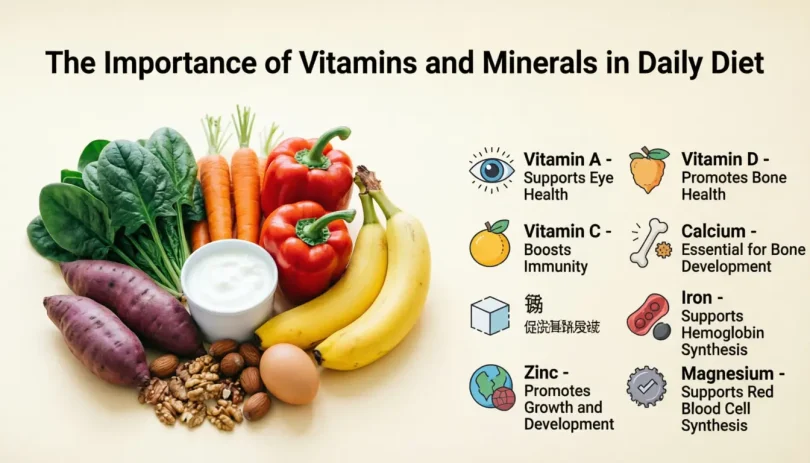
The Importance of Vitamins and Minerals in Daily Diet cannot be ignored if you want to maintain good health and long-term wellness. These nutrients may be required in small amounts, but their impact on the body is extremely powerful. From boosting immunity to supporting brain function, vitamins and minerals play a vital role in keeping every system in the body functioning properly. Many people focus only on calories and macronutrients like protein and carbohydrates, but often overlook these essential micronutrients.
Understanding the Importance of Vitamins and Minerals in Daily Diet helps you make smarter food choices. Without enough of these nutrients, the body may feel tired, weak, or more prone to illness. The good news is that you can get most essential nutrients for a healthy body through balanced eating habits. This guide will explain their functions, benefits, sources, and how to include them in your daily meals effectively.
What is the Importance of Vitamins and Minerals in Daily Diet?
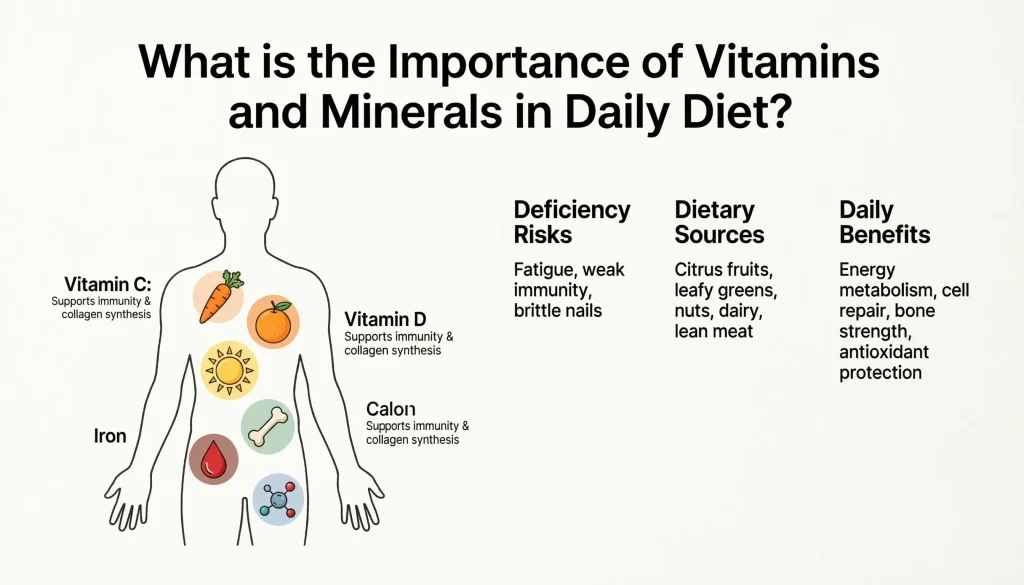
Vitamins and minerals are micronutrients that the body needs in small amounts to function properly. Unlike carbohydrates, proteins, and fats, they do not provide energy directly. However, they help the body use energy efficiently.
There are two main types:
1. Vitamins
- Vitamin A
- Vitamin B complex
- Vitamin C
- Vitamin D
- Vitamin E
- Vitamin K
2. Minerals
- Calcium
- Iron
- Zinc
- Magnesium
- Potassium
- Sodium
The role of micronutrients in nutrition is to support growth, repair tissues, strengthen immunity, and maintain organ function.
Why is the Importance of Vitamins and Minerals in Daily Diet So Critical?
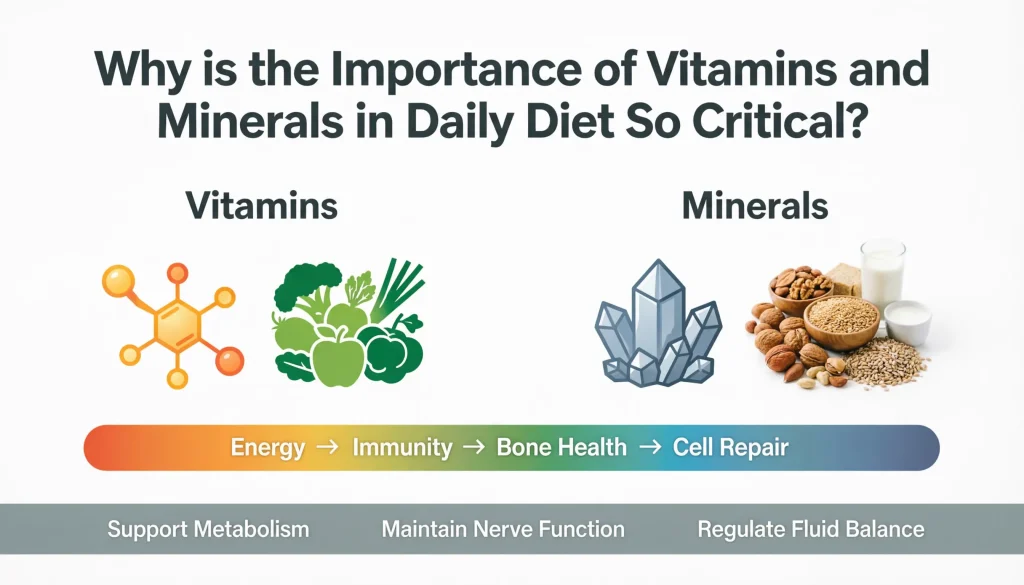
The Importance of Vitamins and Minerals in Daily Diet becomes clear when deficiencies appear. Lack of Vitamin D can weaken bones. Iron deficiency may cause fatigue. Low Vitamin C reduces immunity.
Here’s why they matter:
- They support immune function.
- They improve energy production.
- They maintain strong bones and teeth.
- They help in hormone regulation.
- They support brain health.
Without proper intake, the body cannot perform essential processes effectively.
Detailed Guide to Vitamins and Minerals
Vitamin A
Supports vision and immune health.
Sources: Carrots, sweet potatoes, spinach.
Vitamin B Complex
Helps convert food into energy.
Sources: Whole grains, eggs, dairy products.
Vitamin C
Boosts immunity and skin health.
Sources: Citrus fruits, strawberries, bell peppers.
Vitamin D
Supports calcium absorption and bone health.
Sources: Sunlight, fortified milk, fatty fish.
Vitamin E
Protects cells from damage.
Sources: Nuts, seeds, vegetable oils.
Vitamin K
Essential for blood clotting.
Sources: Leafy greens, broccoli.
Calcium
Strengthens bones and teeth.
Sources: Milk, yogurt, cheese.
Iron
Carries oxygen in the blood.
Sources: Red meat, beans, spinach.
Zinc
Supports immune function.
Sources: Meat, seeds, nuts.
Magnesium
Helps muscle and nerve function.
Sources: Almonds, legumes, whole grains.
Benefits of Vitamins and Minerals
- Strong immune system
- Improved metabolism
- Better skin and hair health
- Stronger bones and muscles
- Reduced fatigue
- Better brain function
- Balanced hormones
- Improved digestion
- Lower risk of chronic diseases
The benefits of vitamins and minerals are visible when intake is consistent and balanced.
Disadvantages / Risks
- Overconsumption through supplements may cause toxicity
- Imbalance between nutrients may reduce absorption
- Self-medication without medical advice can be harmful
Natural food sources are safer than excessive supplementation.
Common Mistakes to Avoid
- Skipping fruits and vegetables
- Relying only on processed foods
- Taking supplements without testing deficiencies
- Ignoring variety in meals
- Following extreme diets
Balanced eating prevents these mistakes.
Can I get all vitamins from food?
Yes, a balanced diet usually provides most nutrients.
Are supplements necessary?
Only if a doctor confirms deficiency.
What happens if I lack iron?
You may feel weak and tired.
How much Vitamin D do I need?
It varies, but sunlight and fortified foods help.
Can too many vitamins be harmful?
Yes, fat-soluble vitamins can accumulate in the body.
Why are minerals important?
They regulate fluid balance, bone health, and nerve signals.
Expert Tips & Bonus Points
- Eat colorful fruits and vegetables daily.
- Include dairy or alternatives for calcium.
- Spend time in sunlight for Vitamin D.
- Avoid overcooking vegetables.
- Choose whole foods over processed items.
- Maintain hydration.
Small daily improvements make a big difference.
Conclusion
The Importance of Vitamins and Minerals in Daily Diet is fundamental to maintaining overall health and preventing disease. These essential nutrients for a healthy body work behind the scenes to support immunity, metabolism, brain function, and bone strength. Even though they are needed in small amounts, their absence can cause significant health problems.
By understanding the role of micronutrients in nutrition, you can make better food choices every day. Eating a variety of fruits, vegetables, whole grains, lean proteins, and dairy products ensures your body receives balanced nourishment. Instead of depending heavily on supplements, focus on natural food sources whenever possible.
Good nutrition is not complicated. It simply requires awareness, balance, and consistency. When you prioritize vitamins and minerals in your daily meals, you build a strong foundation for long-term health and well-being.