
Introduction
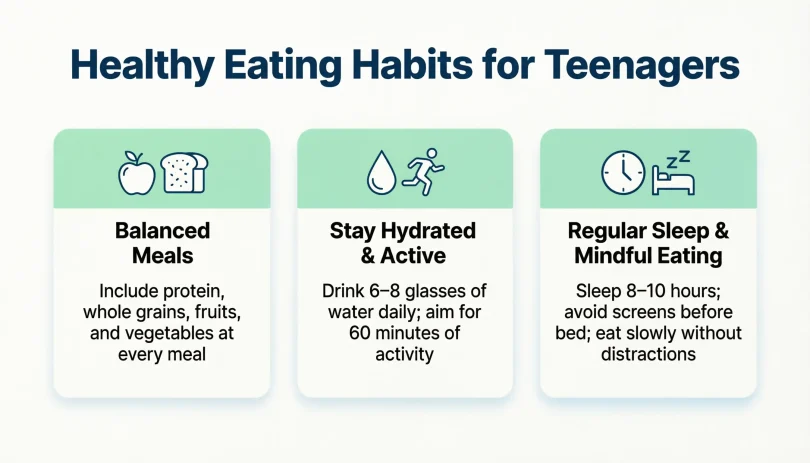
Healthy Eating Habits for Teenagers play a very important role in supporting physical growth, mental development, and overall well-being during adolescence. Teenage years are a period of rapid development, where the body requires proper nutrition to maintain energy levels, strengthen bones, support brain function, and build a strong immune system. Unfortunately, many teenagers rely heavily on fast food, sugary drinks, and processed snacks, which can lead to unhealthy habits and long-term health problems.
Developing Healthy Eating Habits for Teenagers is not about strict dieting or avoiding favorite foods completely. Instead, it focuses on maintaining balance, choosing nutritious options, and understanding how food affects the body. A balanced diet for teenagers should include a variety of fruits, vegetables, whole grains, proteins, and healthy fats to provide the essential nutrients required for healthy growth.
Parents, teachers, and teenagers themselves should understand the importance of proper nutrition. Good eating habits developed during adolescence often continue into adulthood, making them an essential foundation for lifelong health. By following simple nutrition tips for teenagers and choosing healthy foods for teenage growth, it becomes easier to maintain energy, focus better in school, and prevent future health issues.
This guide explains everything teenagers need to know about healthy eating habits, including their importance, benefits, common mistakes to avoid, and practical tips to build a healthier lifestyle.
What are Healthy Eating Habits for Teenagers?
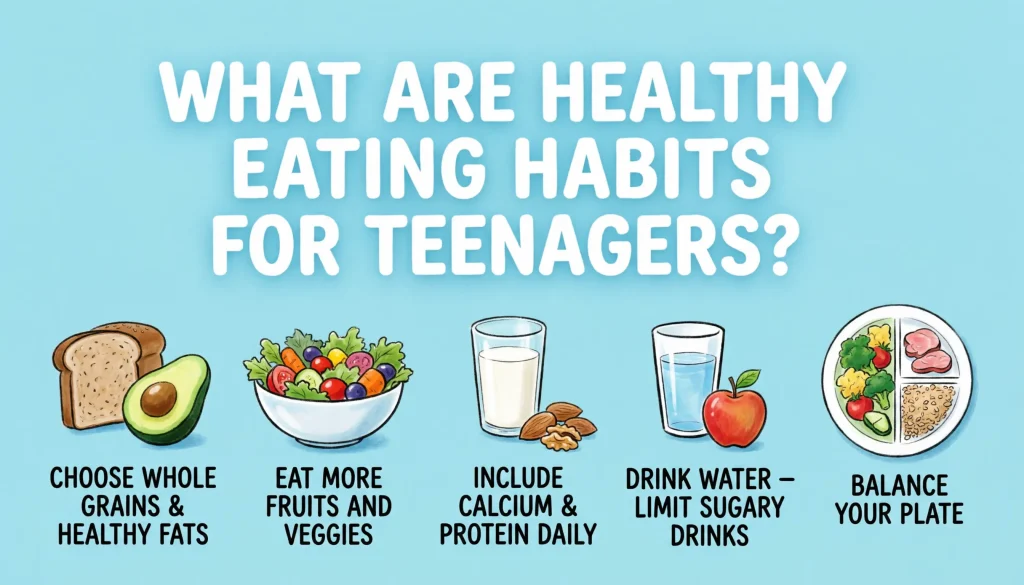
Healthy Eating Habits for Teenagers refer to consistent dietary practices that provide the body with the nutrients needed for growth, development, and energy. These habits focus on consuming a balanced combination of different food groups rather than relying on processed or unhealthy foods.
A balanced diet for teenagers usually includes:
- Fruits and vegetables
- Whole grains
- Lean protein sources
- Dairy or calcium-rich foods
- Healthy fats
These foods provide vitamins, minerals, fiber, protein, and energy necessary for maintaining physical and mental health.
Healthy eating habits also include behaviors such as:
- Eating regular meals
- Avoiding excessive junk food
- Drinking enough water
- Controlling portion sizes
- Choosing nutritious snacks
When teenagers follow proper nutrition tips for teenagers, they are more likely to maintain a healthy weight, improve concentration, and support their growing bodies effectively.
Why Are Healthy Eating Habits for Teenagers Important?

The teenage years are one of the most critical stages of human development. The body grows rapidly, bones strengthen, muscles develop, and the brain continues to mature.
Healthy Eating Habits for Teenagers are important for several reasons.
First, proper nutrition supports physical growth. Teenagers require more nutrients compared to adults because their bodies are developing quickly.
Second, healthy foods provide energy needed for school activities, sports, and daily tasks.
Third, a balanced diet for teenagers helps improve concentration and academic performance.
Fourth, eating nutritious meals strengthens the immune system and helps prevent illnesses.
Finally, developing good eating habits during adolescence helps reduce the risk of future health problems such as obesity, diabetes, and heart disease.
When teenagers understand the importance of nutrition, they are more likely to choose healthy foods for teenage growth instead of unhealthy snacks.
Step-by-Step Guide to Healthy Eating Habits for Teenagers
Eat a Balanced Breakfast
Breakfast is one of the most important meals of the day. Teenagers who skip breakfast often feel tired and have difficulty concentrating.
Healthy breakfast options include:
- Oatmeal with fruits
- Whole-grain toast with eggs
- Yogurt with nuts and berries
- Smoothies made with milk and fruits
A nutritious breakfast provides energy and helps maintain healthy eating habits for teenagers throughout the day.
Include Fruits and Vegetables Daily
Fruits and vegetables are rich in vitamins, minerals, and fiber.
Teenagers should aim to eat at least five servings of fruits and vegetables daily.
Examples include:
- Apples
- Bananas
- Carrots
- Spinach
- Tomatoes
- Broccoli
These foods support digestion, strengthen immunity, and provide essential nutrients.
Choose Whole Grains
Whole grains provide long-lasting energy and support digestive health.
Examples of whole grains include:
- Brown rice
- Whole wheat bread
- Oats
- Quinoa
Replacing refined grains with whole grains is one of the most effective nutrition tips for teenagers.
Eat Enough Protein
Protein supports muscle development and overall growth.
Healthy protein sources include:
- Eggs
- Chicken
- Fish
- Beans
- Lentils
- Nuts
Including protein in every meal helps maintain energy levels and supports healthy foods for teenage growth.
Limit Junk Food
Fast food, sugary snacks, and processed foods contain high levels of unhealthy fats, salt, and sugar.
Teenagers should avoid eating junk food frequently. Instead, they can choose healthier snacks such as:
- Fruits
- Yogurt
- Nuts
- Homemade sandwiches
Reducing junk food intake improves overall nutrition.
Drink Enough Water
Hydration is essential for maintaining energy and concentration.
Teenagers should drink at least 6–8 glasses of water daily. Water helps regulate body temperature and supports digestion.
Sugary drinks such as sodas and energy drinks should be limited.
Benefits of Healthy Eating Habits for Teenagers
Healthy Eating Habits for Teenagers offer many advantages.
- Supports proper physical growth
- Improves concentration and learning ability
- Strengthens the immune system
- Maintains healthy body weight
- Boosts energy levels
- Promotes healthy skin and hair
- Reduces risk of chronic diseases
- Improves mood and mental health
- Builds lifelong healthy habits
These benefits show why proper nutrition is essential during adolescence.
Disadvantages or Risks of Poor Eating Habits
Ignoring Healthy Eating Habits for Teenagers may lead to several problems.
- Nutrient deficiencies
- Increased risk of obesity
- Weak immune system
- Poor academic performance
- Low energy levels
- Higher risk of chronic diseases in adulthood
Poor nutrition can affect both physical and mental health.
Common Mistakes to Avoid
Teenagers often make several dietary mistakes.
Some common ones include:
Skipping meals
Eating too much fast food
Consuming excessive sugary drinks
Not eating enough fruits and vegetables
Following extreme diets
Overeating processed snacks
Avoiding these mistakes can significantly improve healthy eating habits.
What is the best diet for teenagers?
The best diet for teenagers includes fruits, vegetables, whole grains, lean protein, dairy products, and healthy fats.
How many meals should teenagers eat daily?
Teenagers should ideally eat three main meals and one or two healthy snacks each day.
Why do teenagers need more nutrients?
Teenagers are growing rapidly, so their bodies require more vitamins, minerals, and calories to support development.
Are snacks unhealthy for teenagers?
Snacks are not unhealthy if they are nutritious. Healthy snacks such as fruits, yogurt, and nuts provide energy between meals.
How can teenagers avoid junk food?
Teenagers can avoid junk food by keeping healthy snacks available and limiting fast-food consumption.
Do teenagers need supplements?
Most teenagers can get enough nutrients from a balanced diet. Supplements should only be taken if recommended by a doctor.
Expert Tips and Bonus Points
Here are some expert tips to improve Healthy Eating Habits for Teenagers.
Plan meals in advance
Choose home-cooked meals whenever possible
Eat slowly and mindfully
Include a variety of foods in meals
Avoid skipping breakfast
Practice portion control
Stay physically active
These small changes can lead to significant improvements in overall health.
Conclusion
Healthy Eating Habits for Teenagers are essential for building a strong foundation for lifelong health. During adolescence, the body undergoes rapid growth and development, making proper nutrition more important than ever. A balanced diet for teenagers provides the essential nutrients required for physical growth, mental focus, and energy.
By following simple nutrition tips for teenagers and including healthy foods for teenage growth in daily meals, young individuals can maintain a healthy lifestyle and prevent future health problems. Fruits, vegetables, whole grains, proteins, and dairy products should be regular parts of a teenager’s diet.
At the same time, limiting junk food, sugary drinks, and highly processed snacks is necessary to maintain good health. Developing healthy eating habits during teenage years also helps create positive lifestyle patterns that continue into adulthood.
Ultimately, good nutrition is not about strict rules but about making smart choices consistently. When teenagers understand the importance of balanced meals and proper hydration, they are more likely to stay energetic, perform better academically, and enjoy better overall well-being.