
Introduction
Exercises to Boost Mental Well-being are not only about fitness or weight loss. They are powerful tools that improve your mood, reduce stress, and strengthen emotional stability. In today’s busy world, many people struggle with anxiety, negative thoughts, and mental exhaustion. The good news is that regular movement can help you feel calmer and more confident. Even small changes in your daily routine can create a big difference in how you think and feel.
When you practice Exercises to Boost Mental Well-being consistently, your brain releases chemicals that support happiness and relaxation. These activities do not need expensive equipment or long gym sessions. Simple workouts for mental health, such as walking, stretching, or breathing exercises, can improve your overall quality of life. This guide will explain how physical activity for stress relief works, why daily exercise for emotional balance matters, and how you can start step by step.
What is Exercises to Boost Mental Well-being?

Exercises to Boost Mental Well-being refer to physical activities designed to improve emotional health, reduce anxiety, and support positive thinking. These exercises focus on strengthening the connection between the body and mind.
Mental well-being includes:
- Emotional stability
- Stress management
- Positive self-image
- Clear thinking
- Balanced mood
When you move your body, your brain produces endorphins. These are natural chemicals that reduce pain and increase happiness. That is why many people feel relaxed after exercise.
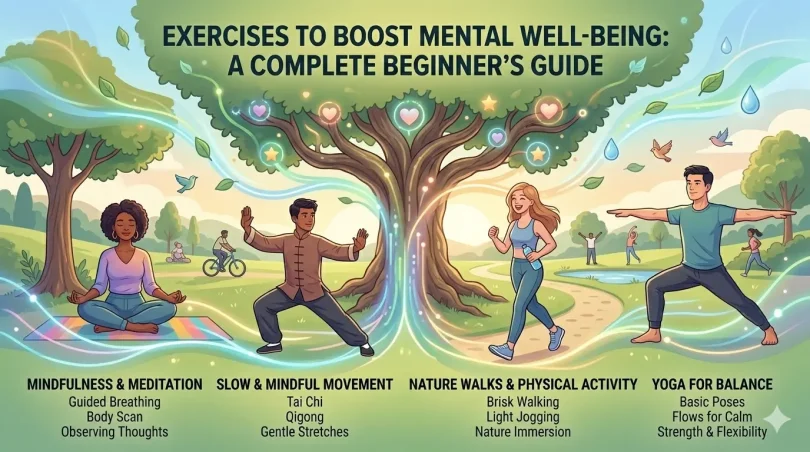
Simple workouts for mental health can include walking, yoga, dancing, cycling, or light strength training. The goal is not extreme fitness but emotional balance.
Why is Exercises to Boost Mental Well-being Important?

Mental health challenges are increasing worldwide. Stress from work, studies, social pressure, and daily responsibilities can build up quickly. Without healthy coping strategies, this stress may lead to anxiety or burnout.
Here is why Exercises to Boost Mental Well-being are important:
- They reduce stress hormones.
- They improve sleep quality.
- They increase self-confidence.
- They support better focus.
- They help manage emotional ups and downs.
Physical activity for stress relief is one of the most natural and affordable solutions. Instead of depending only on external solutions, movement allows your body to heal itself.
Daily exercise for emotional balance also builds discipline. When you complete even a short workout, you feel a sense of achievement. That feeling improves self-worth and motivation.
Detailed Step-by-Step Guide
Step 1: Start with Light Movement
If you are new to exercise, begin with gentle activities.
Examples:
- 10-minute morning walk
- Light stretching
- Slow yoga poses
Consistency matters more than intensity. The purpose of Exercises to Boost Mental Well-being is emotional improvement, not exhaustion.
Step 2: Add Breathing Exercises
Deep breathing reduces anxiety instantly.
Try this method:
- Inhale slowly for four seconds.
- Hold for four seconds.
- Exhale for four seconds.
- Repeat five times.
This simple technique is a powerful example of physical activity for stress relief.
Step 3: Include Cardio Twice a Week
Cardio exercises increase heart rate and boost mood.
Options include:
- Brisk walking
- Cycling
- Swimming
- Dancing
Cardio supports daily exercise for emotional balance by improving blood flow to the brain.
Step 4: Practice Strength Training
Strength training improves confidence and resilience.
You can try:
- Push-ups
- Squats
- Resistance band exercises
- Light weight lifting
Simple workouts for mental health that build physical strength also build mental toughness.
Step 5: Try Mind-Body Exercises
Mind-body workouts combine movement with awareness.
Examples:
- Yoga
- Tai chi
- Pilates
These Exercises to Boost Mental Well-being calm racing thoughts and improve concentration.
Step 6: Create a Weekly Plan
Structure helps consistency.
Sample weekly plan:
- Monday: 20-minute walk
- Tuesday: Stretching + breathing
- Wednesday: Light strength training
- Thursday: Rest or yoga
- Friday: Cardio session
- Saturday: Outdoor activity
- Sunday: Relaxed stretching
Daily exercise for emotional balance becomes easier when planned.
Step 7: Track Your Mood
After each workout, write down how you feel.
Notice:
- Energy levels
- Mood changes
- Sleep quality
Tracking helps you see the real impact of Exercises to Boost Mental Well-being.
Step 8: Stay Flexible
Do not aim for perfection.
If you miss a day, continue the next day. Progress matters more than strict discipline.
Benefits of Exercises to Boost Mental Well-being
- Reduces stress naturally
- Improves sleep quality
- Increases positive thinking
- Enhances self-confidence
- Boosts memory and focus
- Lowers anxiety symptoms
- Supports emotional resilience
- Encourages healthy lifestyle habits
- Builds self-discipline
- Strengthens body and mind connection
Physical activity for stress relief works quickly and safely when practiced regularly.
Disadvantages / Risks
Although beneficial, there are some risks:
- Overexercising may cause fatigue
- Comparing yourself to others can reduce motivation
- Ignoring rest days may lead to burnout
- Unrealistic fitness goals create pressure
- Injuries can occur without proper technique
Exercises to Boost Mental Well-being should feel supportive, not stressful.
Common Mistakes to Avoid
- Starting too intensely
- Expecting instant results
- Skipping warm-up and cool-down
- Exercising only when stressed
- Ignoring hydration
- Not listening to your body
Simple workouts for mental health must remain enjoyable and sustainable.
How long should I exercise daily for mental health?
Even 20–30 minutes of movement can make a difference. Daily exercise for emotional balance does not require long gym sessions.
Can exercise replace therapy?
Exercise supports mental health but may not replace professional help in serious conditions. It works best as part of a balanced approach.
What is the best exercise for anxiety?
Walking, yoga, and breathing exercises are excellent forms of physical activity for stress relief.
Is morning or evening exercise better?
Both work well. Choose a time that fits your schedule so you stay consistent.
How soon will I see results?
Some mood improvements appear immediately after exercise. Long-term emotional stability may take a few weeks.
Can beginners start easily?
Yes. Exercises to Boost Mental Well-being are suitable for beginners. Start slowly and increase gradually.
Expert Tips & Bonus Points
- Combine exercise with sunlight exposure.
- Listen to calming music during workouts.
- Exercise outdoors when possible.
- Stay hydrated.
- Set realistic goals.
- Celebrate small progress.
- Focus on enjoyment, not perfection.
- Stretch after workouts.
- Rest when needed.
- Keep workouts simple and consistent.
Daily exercise for emotional balance becomes powerful when done regularly without pressure.
Conclusion
Exercises to Boost Mental Well-being offer a simple yet powerful way to improve emotional health. In a world filled with stress and constant demands, taking time to move your body is an act of self-care. These exercises do not require expensive equipment or advanced skills. Simple workouts for mental health such as walking, stretching, yoga, and light strength training can create lasting positive changes.
When you include physical activity for stress relief in your daily routine, your brain and body work together to reduce anxiety and increase happiness. Over time, daily exercise for emotional balance builds confidence, improves sleep, and strengthens emotional resilience. The key is consistency and patience. Small daily actions lead to meaningful transformation.
Remember, mental well-being is a journey, not a quick fix. Start slowly, stay committed, and focus on progress rather than perfection. With regular movement and mindful habits, you can create a healthier mind and a stronger, more balanced life.